

Fall Forum NYC: The Evolution of Influence
LinkedIn proudly hosted the Financial Narrative Fall Forum at its New York City office, located in the iconic Empire State Building. This year, members explored the changing face of influence from shifting trust dynamics to emerging technologies and bold new strategies.
>> VIEW THE FULL IMAGE GALLERY <<
OPENING KEYNOTE:
CUSTOMER-CENTRIC INNOVATION & THE FUTURE OF FINTECH
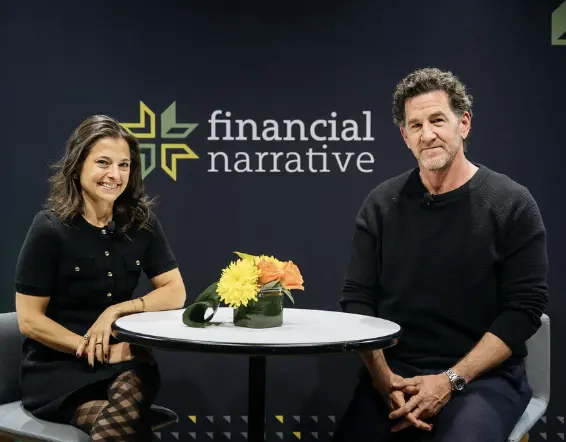 > ADAM DELL, FOUNDER / CEO, DOMAIN MONEY
> CRISTINA ALESCI, MANAGING DIRECTOR, STRATEGIC COMMUNICATIONS, 26NORTH
The discussion framed the next wave of financial-services disruption as a tech-driven attack on rent-seeking middlemen, from overdraft-heavy retail banking to 1 percent wealth-management fees that quietly hand advisors “a house” over a client’s lifetime.
Behavioral economics now underpins a shift from generic “save more” nudges to goal-based, gamified tools that anchor money decisions in real-life desires like homes, vacations, and children’s futures, helping consumers override short-term impulses.
AI is a newly democratized “thought partner” that lets even small firms analyze accounts, habits and life goals to build deeply personalized plans for the mass-affluent segment traditional firms underserve, while humans remain central for long-term judgment and trust. Building around this model means hiring for raw intellect, visible ambition, and tight mission alignment, then using marketing not just to sell but to act as an advocate – narrowing the gap between perception and reality with crisp, empowering proposition that signal transparency, side with the customer, and make moving away from legacy institutions feel both safer and smarter.
EXPERT EXCHANGE:
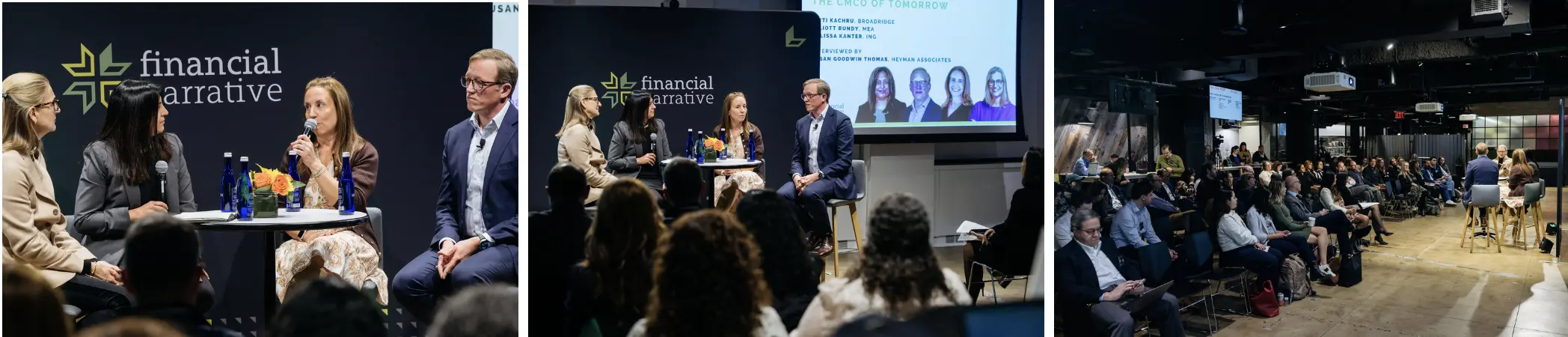
THE CMCO OF TOMORROW
> DIPTI KACHRU, GLOBAL CMO, BROADRIDGE
> ELLIOTT BUNDY, CHIEF MARKETING OFFICER, MEA
> MELISSA KANTER, HEAD OF COMMUNICATIONS & RAN, ING
> SUSAN GOODWIN THOMAS, PARTNER, HEYMAN ASSOCIATES
The modern comms and marketing leader is a trusted navigator of change who cannot do the job without deep, earned trust from executives. The role starts with empathy and listening, then builds through low-risk wins that prove value, anticipate market shifts, and help leaders see around corners, which in turn creates room for candid, constructive feedback.
Respect comes from conviction, not constant agreement: senior marketers are expected to articulate what they believe, define non-negotiables tied to growth and performance, and use clear business language when pushing back instead of defaulting to “yes” for likability.
The remit itself is increasingly blended across marketing, communications, and corporate affairs, with titles mattering less than integration, sensitivity to an organization’s maturity, and a clear long-term end state. AI is expected to change the toolkit and the metrics, not the fundamentals: brand stewardship and growth remain the mandate, while dashboards, ROI definitions, and agency expectations evolve so leadership can see exactly how marketing drives outcomes.
FROM FORECAST TO FLEXIBILITY:
THE NEW RULES OF 2026 MARCOMMS PLANNING
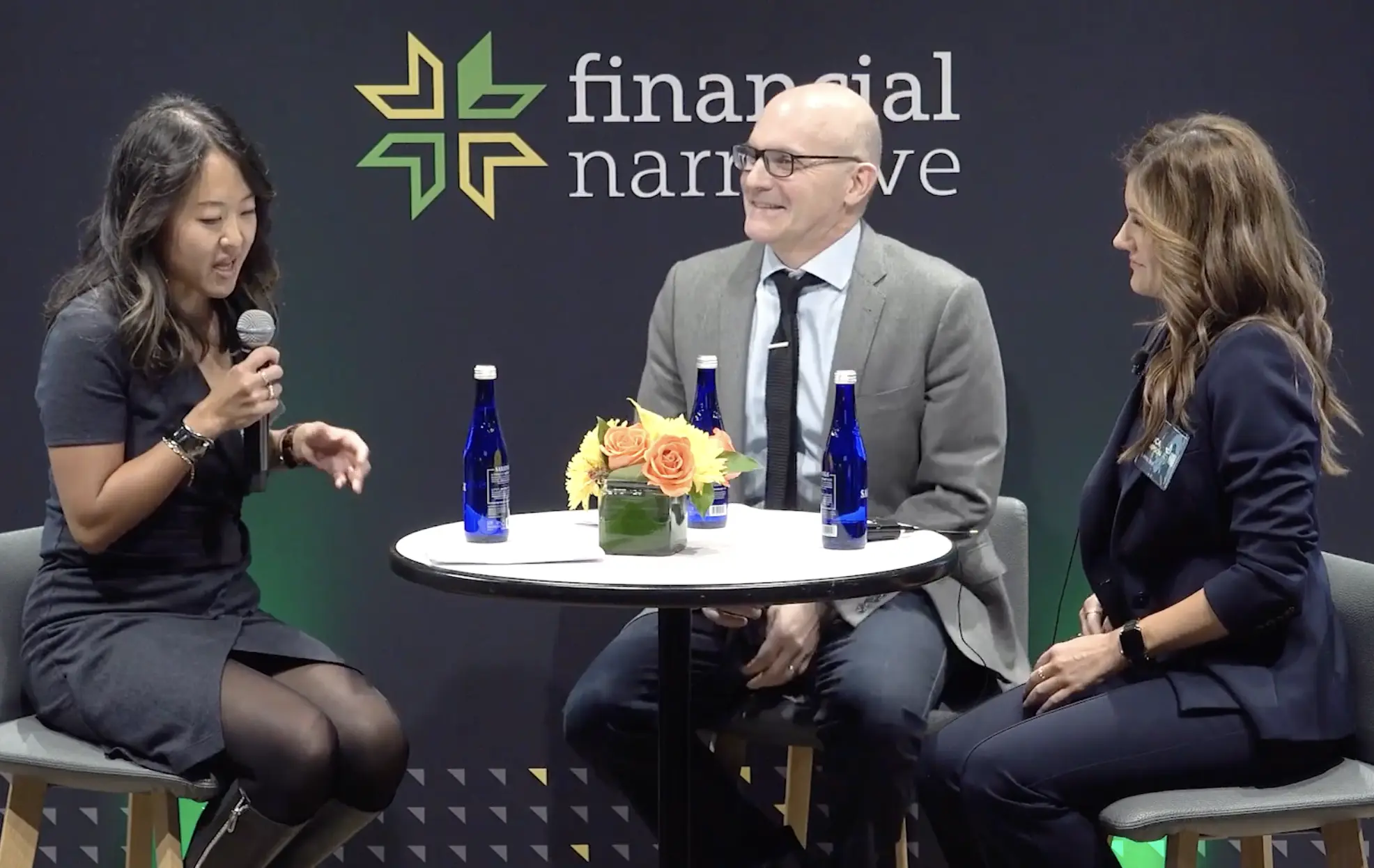 > BINNA KIM, GROUP CEO & CO-FOUNDER, VESTED
> ERICA SIMPSON, HEAD OF CAPITAL MARKETS MARKETING, CAPITAL ONE
> MICHAEL MARINELLO, MD, GLOBAL HEAD OF COMMUNICATIONS, PAYMENTS, JPMORGAN CHASE & CO PAYMENTS
2026 marcomms planning is breaking with rigid, date-driven calendars and moving to “always-ready” operational plans that can flex with volatile markets, shifting priorities, and surprise news events.
The new rules center on layered planning: a top tier of non-negotiables (multi-year brand bets and must-show industry moments), a middle tier tied to proven revenue drivers, and a flexible layer of campaigns, channels, and thought leadership that can pivot as the narrative changes.
Communications and marketing are treated as equal partners rather than a hierarchy, with comms measured more like sales through CRMs, share of voice, tone, and influence among tightly defined buying audiences.
Event portfolios are being deliberately cut back to fewer, higher-ROI touchpoints, backed by upfront investment in data and analytics so teams can set realistic expectations, defend budgets, and show impact over time. Underpinning everything is a test-and-learn mindset: get the business to define its top priorities, align scarce resources to those, and balance short-term wins with long-term brand building through clear KPIs and honest conversations about what is and is not achievable.
EMPOWERING AUTHENTIC VOICES:
HOW FINANCIAL LEADERS ARE REDEFINING INFLUENCE
> ALANA VISCONTI, DIRECTOR OF CORPORATE COMMUNICATIONS, NASDAQ
> ALEXANDRA KELSEY, SENIOR VICE PRESIDENT COMMUNICATIONS, BNY
> JOSEPH MILORD, PRINCIPAL COMMUNITY MANAGER, PUBLISHER PARTNERSHIPS, LINKEDIN
> MICHELE WEISMAN, EXECUTIVE DIRECTOR, GLOBAL HEAD OF SOCIAL MEDIA, JP MORGAN ASSET & WEALTH MANAGEMENT
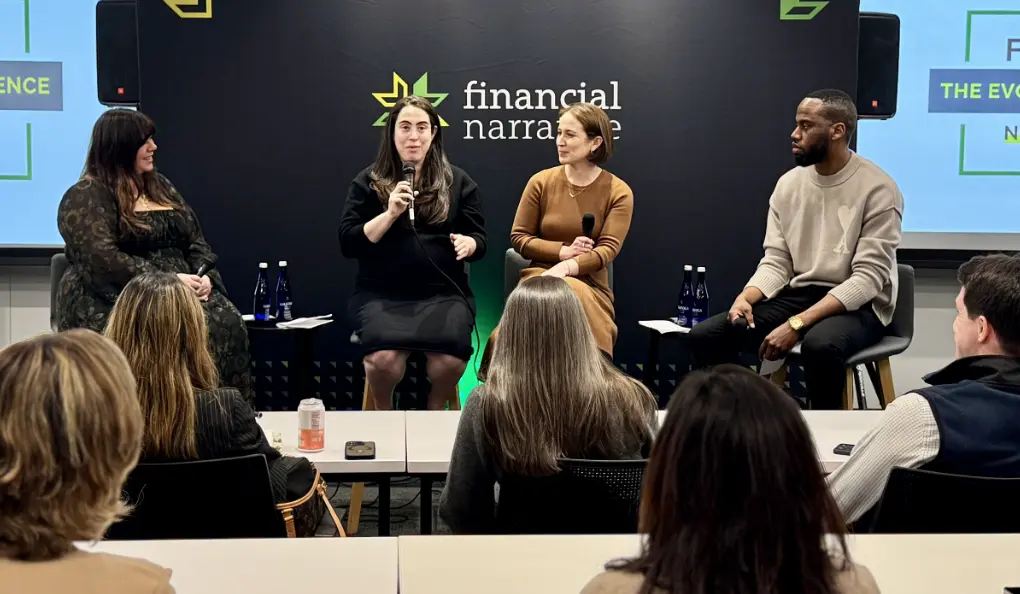 Executive thought leadership on LinkedIn is becoming a core marketing channel in financial services, as audiences look for direct, human context rather than polished brand statements. In a noisy, complex environment, executives who share clear, timely perspectives on markets, policy, and culture help buyers and employees make sense of what is happening, which strengthens trust in the firm.
For marketers, the playbook is to anchor each program in a clear “why,” build a trusted advisor relationship with the executive, starting with simple formats like short text posts, repurposed media clips, casual videos, and newsletters, and measure success by impact on hiring, culture, client conversations, and coverage rather than raw engagement. As AI-generated “slop” increases content volume, narrative, storytelling, timing, and reputational checks become the differentiators that make an executive’s voice stand out.
>> LINKEDIN REPORT DOWNLOADS <<
Growing the Value of Investment Advice
Winning Banking’s Relationship Game
Sales Navigator for Financial Services
MEASURING INFLUENCE:
REDEFINING GROWTH IN THE AGE OF TRUST
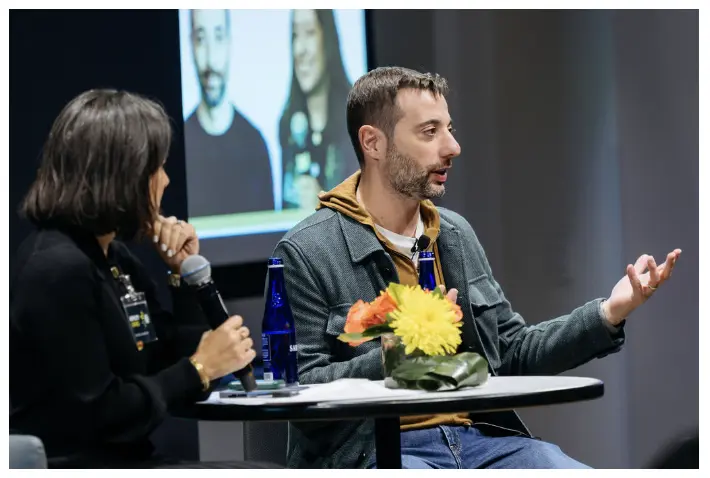 > PAOLO PROVINCIALI, VP MARKETING GROWTH, PERFORMANCE, AND OPERATIONS, LINKEDIN
> ASHLEY JONES, HEAD OF FINANCIAL NARRATIVE
Paolo Provinciali, 2025 Inductee to the Advertising Hall of Achievement, says financial marketers must begin to think beyond in-quarter performance and focus on winning a place in the customer’s consideration set long before anyone is “in market.” Because people rarely switch banks or insurers, most arrive at a buying decision with a short list already in mind, and 90 percent of choices are made within that limited set.
To get there, marketers are advised to reach audiences in lean-back moments, using channels like connected TV that plant a seed when people are not actively researching, then prove impact through robust measurement rather than clicks. Brand health tracking, surveys, and structured feedback from sales conversations all help link shifts in perception to business outcomes, while trust itself is read through proxies such as deal velocity, onboarding conversion, and how confidently prospects move through journeys increasingly shaped by AI search and zero-click research.
The message is not to wait for a perfect model: build a test-and-learn system, be transparent with leadership about what is and is not measurable, and use evolving tools such as marketing mix modeling and AI search analytics to continuously refine how brand activity, events, earned media and new discovery behaviors show up in the numbers.
CLOSING KEYNOTE:
MEDIA IN FLUX
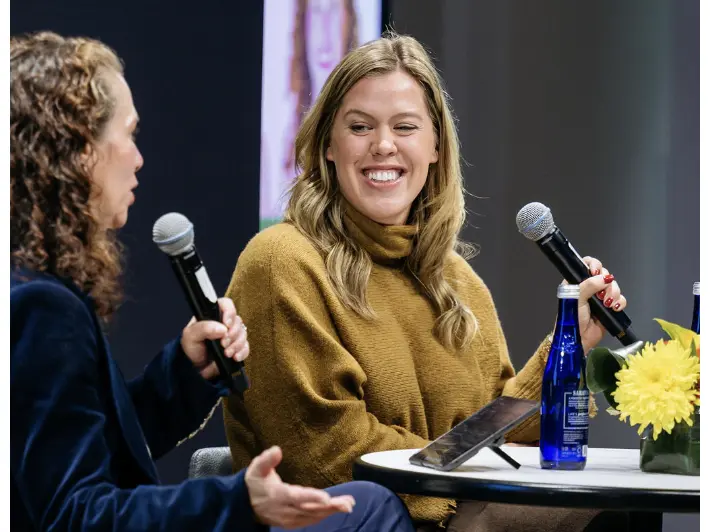 > HELEN TOBIN, HEAD OF COMMUNICATIONS, SUBSTACK
> ALYSSA GILMORE, GLOBAL HEAD OF COMMUNICATIONS, FINANCIAL PRODUCTS, BLOOMBERG
Substack is a “choose your own heroes” platform that gives journalists and readers more agency than traditional media or social feeds. Speakers said that, unlike TikTok and Instagram, which focus on performance and appearance, Substack is about how people think, with direct, often paid inbox relationships that must earn trust every day.
Finance is now Substack’s second-largest category after US politics. Speakers highlighted FT Alphaville’s move onto the platform and pointed to experiments like a Bloomberg Terminal beta as proof that independent and legacy media can coexist and grow audiences there.