
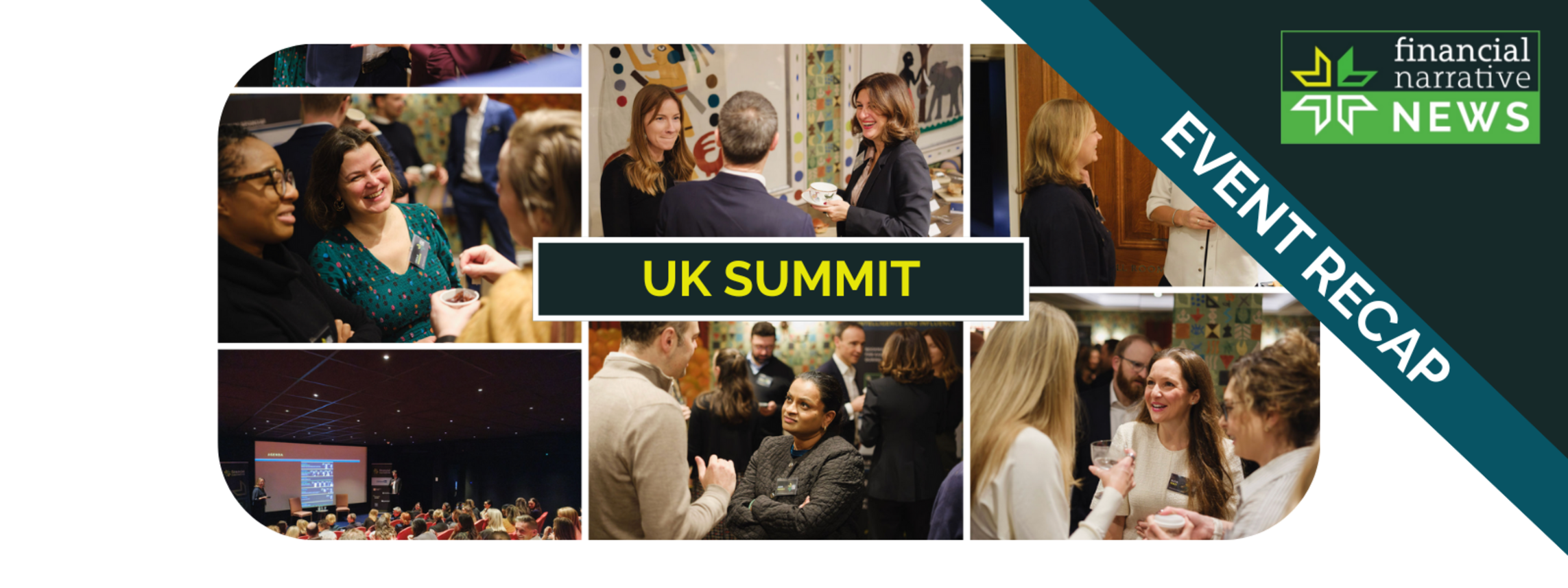
UK Summit: The Strategic Power of Modern Marketing and Communications
At Financial Narrative’s UK Summit in London, senior leaders in marketing and communications compared notes on how their roles are shifting from support functions to strategic power centres.
Across keynotes and panels, the message was clear: the organisations that will win on growth and trust are the ones that treat marketing and communications as core to decision making, not as a downstream channel for campaigns.
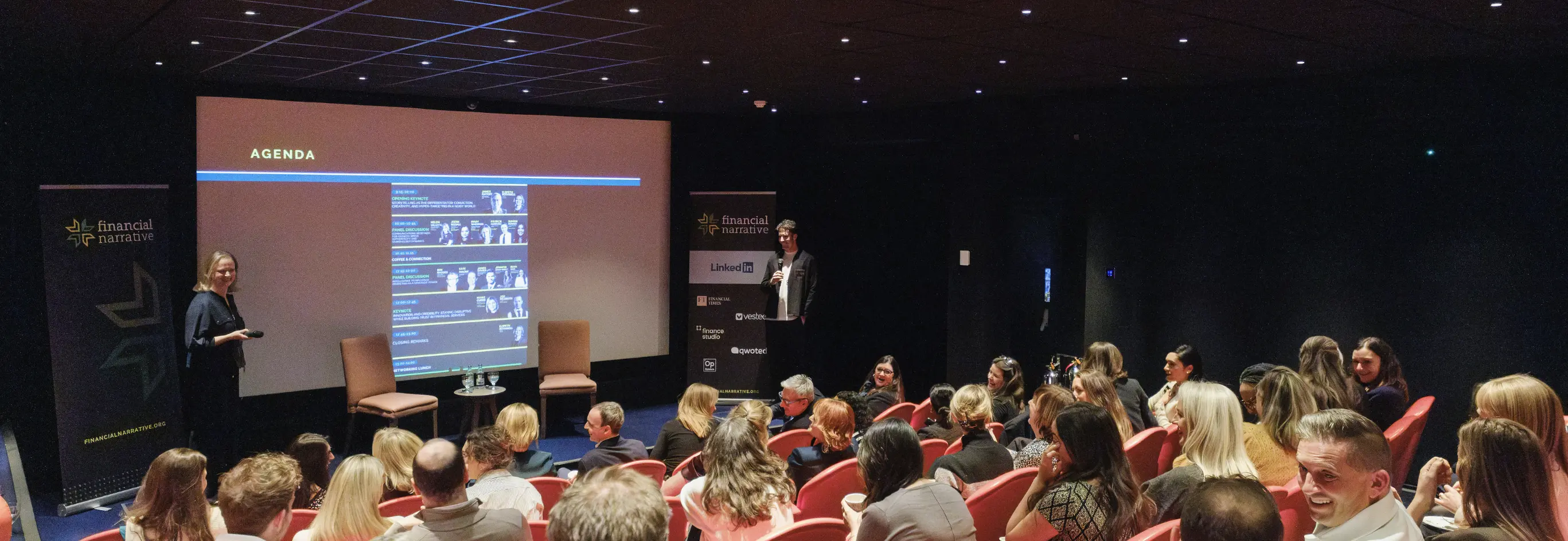
>> VIEW THE FULL IMAGE GALLERY <<
THE STRATEGIC POWER OF MODERN MARKETING + COMMUNICATIONS
Again and again, speakers described a move from “protecting reputation” to actively owning the growth story. Communications and marketing teams are being asked to knit together commercial strategy, stakeholder expectations and public narrative, often alongside responsibilities that look very close to chief of staff roles. That means talking margin, revenue and pivot points as confidently as channels and creative, and backing every growth claim with both hard numbers and human impact. It also means managing the politics of growth language, particularly in the UK, by grounding it in tangible benefits for customers, communities and the wider economy.
Underpinning this strategic shift is a hard focus on foundations. Clean, accurate client data and properly integrated tech stacks were described as non-negotiable. Without them, there is no reliable line of sight from an initial touchpoint to warm leads and commercial outcomes. Several leaders talked about the unglamorous work of cleansing email databases, fixing CRM issues and stitching together platforms so they can track engagement from opens and forwards through to event registrations and product conversations. AI sits on top of that plumbing as a thought partner, surfacing patterns, highlighting soft opportunities and speeding up analysis. Human plus AI teams were consistently seen as outperforming either on their own, but only when organisations invest in education, guardrails and the judgement to override tools that behave like overly agreeable employees.
Storytelling and usefulness came through as the real levers of influence. Tone of voice is being treated less as brand wallpaper and more as a commercial asset, with leaders pushing for language that is optimistic, brief and impactful rather than dense or self-important. Anything that fails the “who cares?” test does not make it out the door. Content is being planned across the full funnel, from bolder attention-grabbing ideas at the top, through tools, webinars and explainers that build credibility, to clear, jargon-free product information at the point of decision. There was also a strong emphasis on discoverability: naming, metadata and smart distribution across owned, earned and paid channels so that the best ideas are easy to find and reuse, rather than disappearing after one campaign.
Trust and risk management ran through the conversation, especially in long-horizon categories like pensions and investing. A recurring theme was the exchange of strengths between incumbents and challengers. Established firms want the agility and freshness associated with disruptors, while newer entrants are hungry for the deep wells of trust that incumbents enjoy. Both sides were urged to remember that trust is built through clarity, consistency and usefulness, not slogans. On issues management, leaders described the constant balancing act between speed and accuracy. Tools such as pre-approved messaging hubs, refreshed regularly with signoff from legal and compliance, are helping teams respond quickly where appropriate. At the same time, there is recognition that not every flare-up is a crisis. Knowing when to act and when to let noise die down quietly is becoming a core communications skill.
The summit also highlighted the importance of ecosystems, experiences and advocacy. Events were framed as central moments in a longer journey rather than standalone activities. Face-to-face interaction still carries unique weight in building confidence and trust, particularly when combined with data that tracks where relationships sit before, during and after the room. Leaders spoke about “stacking touchpoints” across media, social, events and product to build familiarity and advocacy over time. Influencers and creators are being used selectively to extend reach, especially to younger audiences, but only where there is tight alignment on audience, message and regulatory expectations.
Finally, there was a strong focus on leadership and talent. The strategic power of marketing and communications depends on people who can operate comfortably across creative, data, risk and culture. Teams are being built on a mix of expertise and chemistry, with a premium on adaptability and curiosity. Leaders described the practical work of keeping distributed teams engaged through frequent contact and clear expectations, and the importance of investing in AI and data literacy so that everyone can participate in the new tools, not just a specialist few.
Taken together, the UK Summit painted a picture of modern marketing and communications as the connective tissue of the organisation: turning data into insight, insight into narrative and narrative into trust and growth. The firms that embrace this role, and equip their teams accordingly are likely to be the ones setting the pace in the next phase of financial services transformation.
PANELISTS + MODERATORS
Our thanks to this incredible lineup of marketing leaders!
> JAMES GATOFF, GLOBAL CHIEF STRATEGIC MARKETING OFFICER, AON
> ELSPETH ROTHWELL, EMEA CEO, VESTED
> TERRY RAND, HEAD OF MARKETING, UK MARKETING SOLUTIONS, LINKEDIN
> HELEN WILLETTS, DIRECTOR OF INTERNAL COMMUNICATIONS, BT GROUP / HSBC
> JEENA RIGGALL, DIRECTOR OF COMMUNICATIONS, BRITISH INTERNATIONAL INVESTMENT
> MARY WHENMAN, MANAGING DIRECTOR OF COMMUNICATIONS AND MARKETING, BRITISH BUSINESS BANK
> PATRICK HUMPHRIS, HEAD OF CORPORATE AFFAIRS, CVC CAPITAL PARTNERS
> SUMAN HUGHES, VP COMMUNICATIONS, EUROPE, MASTERCARD
> BEN RHODES, GROUP BRAND & MARKETING DIRECTOR, PHOENIX GROUP
> KATE MACKIE, GLOBAL MARKETING LEAD AND PARTNER, EY
> JAMES DAVIES, DIRECTOR OF MARKETING STRATEGY, INSIGHT AND EFFECTIVENESS, HSBC
> JENNIFER SHAW-SWEET, EMEA LEAD, B2B INSTITUTE, LINKEDIN
> RUYA NIAZI, HEAD OF EMEA MARKETING, PAYMENTS, JPMORGAN CHASE
> MAIKE CURRIE, VP OF PERSONAL FINANCE, PENSIONBEE UK
> JOE MCGRATH, FOUNDER, RHOTIC MEDIA