
EVENT REPLAY: Communicating Trust and Credibility in an Age of Volatility
Financial Narrative and the Financial Times came together on December 4 for a deep dive into trust: what is driving the growing “trust gap” in finance, and how communications leaders can respond. The session combined new findings from the FT/IPA “Bridging the Trust Gap” study with a practitioner discussion featuring Erin Randolph, SVP, marketing and communications at Bailard, and Lindsay DeLarme, managing director and head of marketing and communications at Oaktree Capital, moderated by Ashley Jones, Head of Financial Narrative.
>> Download the study <<
Trust is now a competitive balance-sheet asset
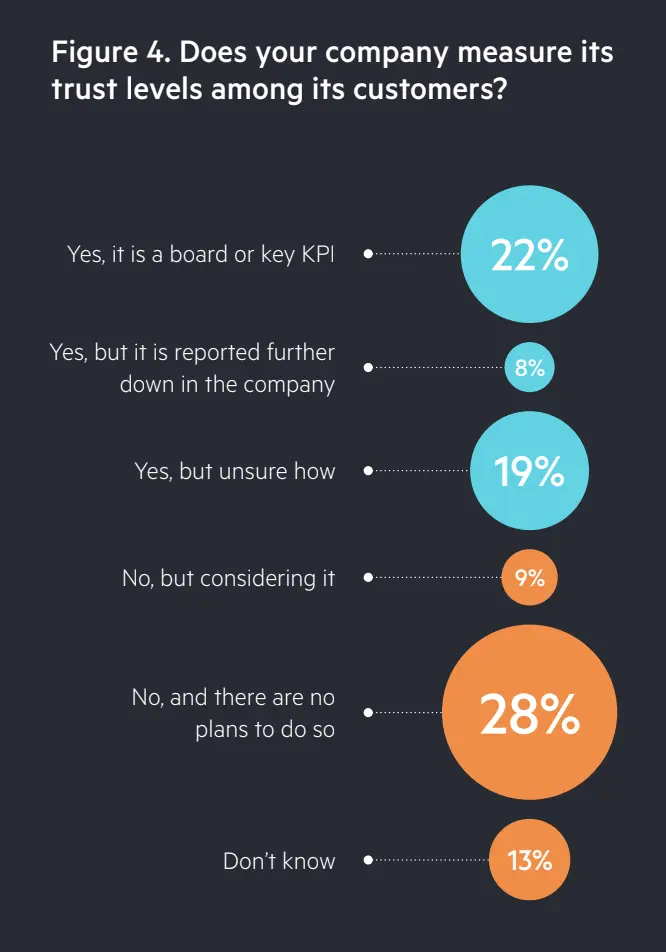
The FT research confirmed that trust has shifted from a soft concept to a hard driver of performance, with business decision makers saying it is significantly more important than it was five years ago and external indices showing highly trusted firms consistently outperforming the market.
At the same time, fewer than half of companies actively measure trust or treat it as a board-level KPI, even tho
ugh finance shows a pronounced “trust gap” between how important trust is and current trust levels. The study identified reliability, consistency, competent human interaction, data security, ethics and responsibility, and transparency as the core building blocks of trust.
Culture, not campaigns, is where trust starts
The panel underscored that trust is built long before any campaign launches, in day-to-day culture and internal expectations. Instead of chasing perfection, teams are encouraged to raise issues early so problems can be fixed together, combining accountability with compassion and fairness.
Trust is viewed as part of the firm’s DNA and mission, not a positioning exercise, which makes it easier to take the harder path with clients when needed, such as slowing work to align with values or having tough conversations in challenging times.
Operationalizing integrity through internal communications
Internal stakeholders were framed as one of the most influential audiences for trust, with a clear sequence for major announcements: employees first, then clients, then the broader market. Internal, client and external messages are kept directionally consistent, with only light tailoring, so no audience sees a version of the story that feels misaligned with what others hear. Internal communications are also used to “tap the brakes” when something feels off, creating space to check whether plans reflect the organization’s values and to adjust before messages reach the outside world.
Turning compliance and data security into proof points
The research findings on data security, ethics and responsibility resonated strongly with the group, who argued that compliance and controls should be reframed as visible markers of care rather than mere friction. Extra checks, legal reviews or added verification are treated as proof that client obligations are taken seriously and that safeguarding assets is non-negotiable. Internally, missteps around data or controls are surfaced and discussed as learning moments, while externally, there is an opportunity to bring governance, security and oversight into brand storytelling as evidence of professionalism and responsibility.
Keeping the human connection at the center of AI adoption
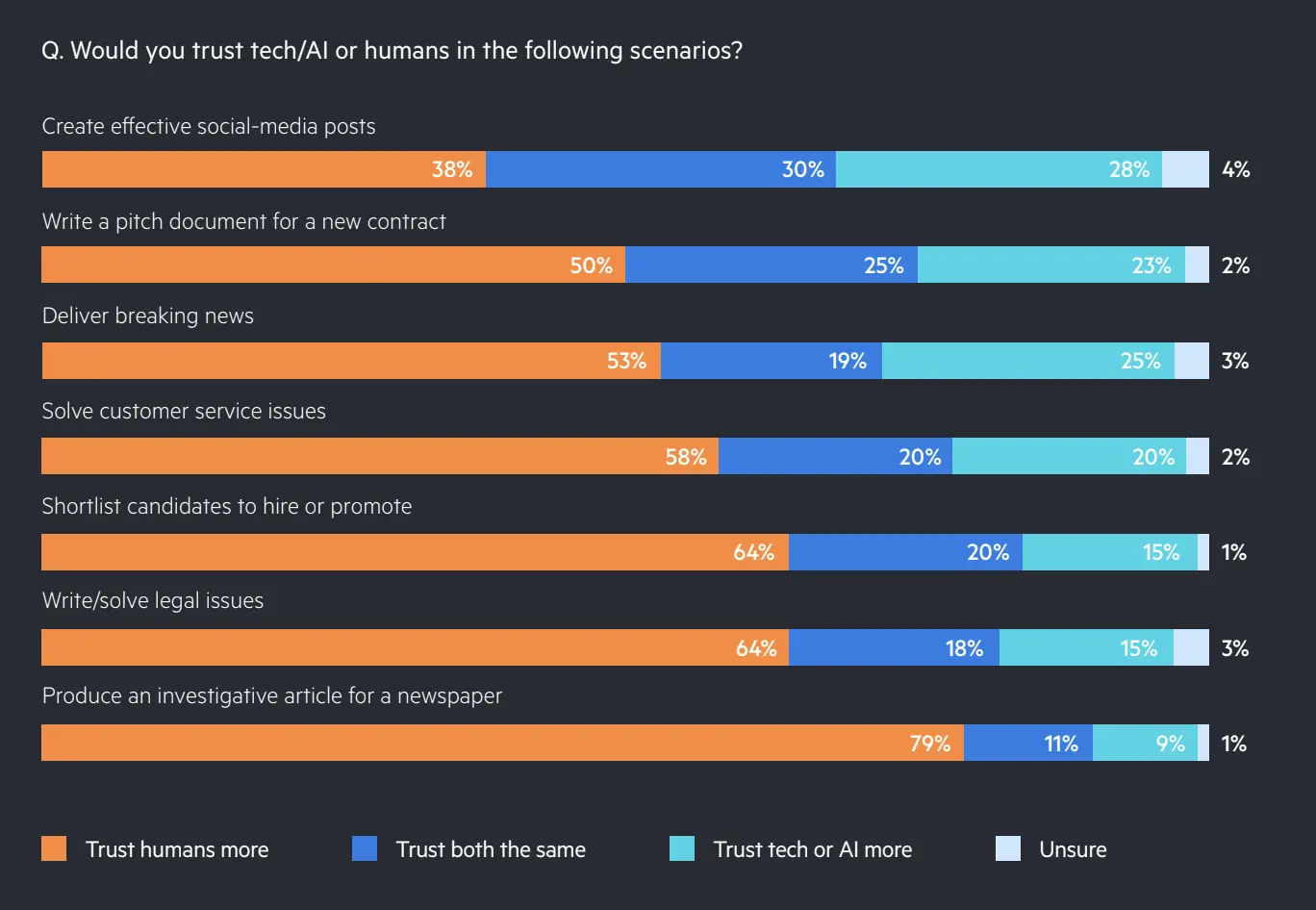
A major tension point in the study was that reduction in human interaction is a top driver of trust concerns, even as organizations lean into AI and automation for efficiency. The discussion emphasized that technology should free up time for humans to be in the room rather than replace relationship-building, for example, by automating routine tasks so experts can focus on client meetings and in-person events.
Speakers described leaning back into live gatherings after the pandemic and investing in thought leadership that showcases real decision-makers in their own voices, while also acknowledging that misuse of AI would significantly erode trust among sophisticated audiences.
Media choices that signal trust in 2026
The FT data showed that where brands show up matters for trust, with international news brands and “gatekeeper” publishers that fully control their content ranking among the most trusted channels and conferring a halo effect on advertisers.
With financial audiences that are both demanding and time poor, the panel stressed the need to be intentional and selective about context, choosing environments that reinforce brand values and communicate seriousness rather than simply maximizing reach. In a sector where many firms look similar on paper, thoughtful media choices, clear labeling of editorial versus paid content and alignment with trusted platforms were framed as critical levers for narrowing finance’s trust gap and turning trust into a durable competitive asset.