

NYC Summit: Credibility Meets Creativity
At Financial Narrative's Spring Summit in New York, hosted in partnership with Bloomberg, senior marketing and communications leaders from across financial services gathered to share perspectives on creativity, measurement, AI adoption and the evolving weight of the CMO role.
Across a fireside chat, panels and a closing roundtable, one message came through clearly: the marketing and communications function is no longer a support layer. It is a growth engine, a risk discipline and an increasingly central voice in corporate strategy.
>>> VIEW THE EVENT GALLERY <<<
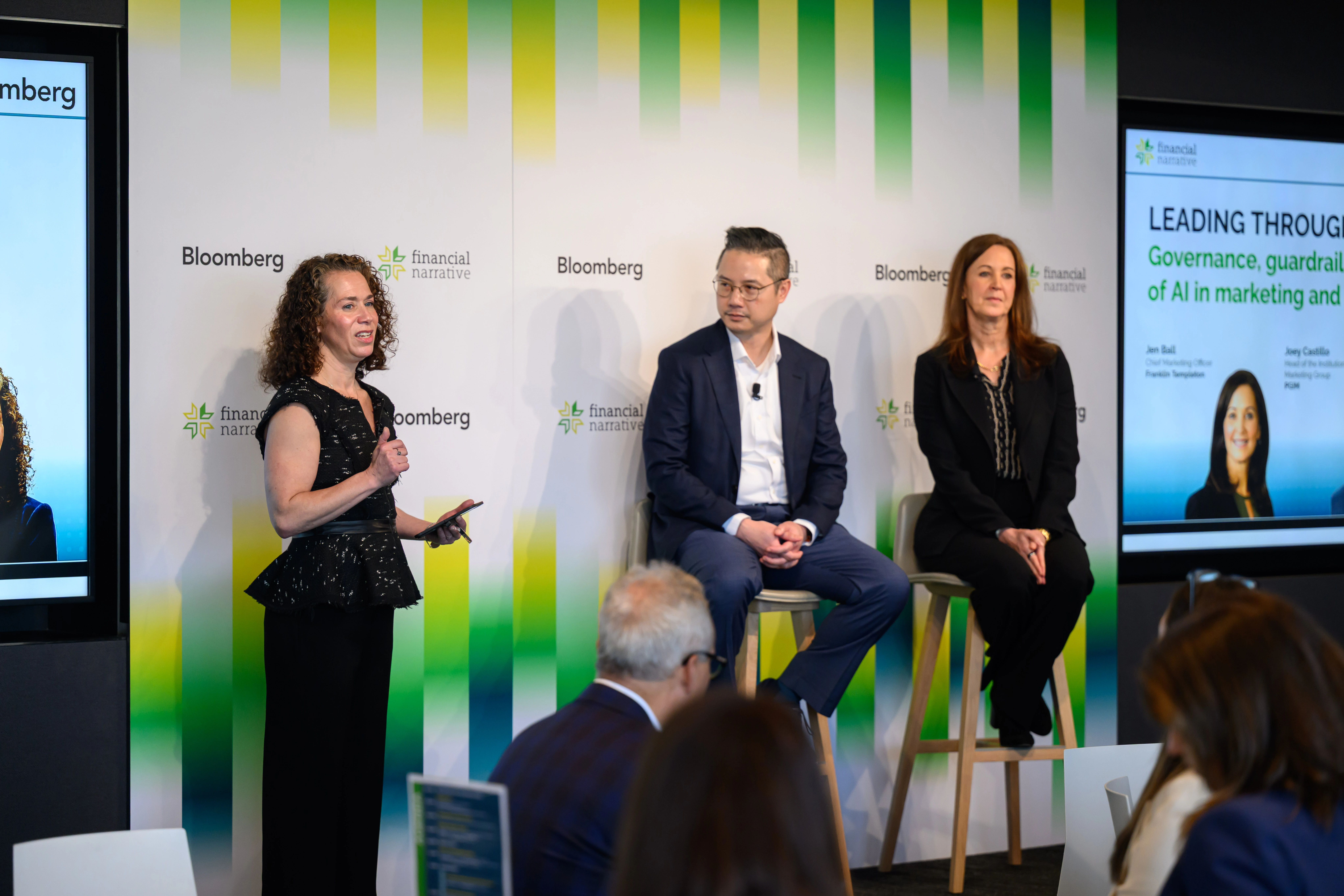
Here's the recap!
THE INTEGRATION OF MARKETING AND COMMUNICATIONS
Several speakers described organizations where marketing and communications now report to a single leader and operate as a single continuum. The original catalyst was social media, which made separate strategies untenable, but the case has deepened with the rise of agentic search and large language models.
Content needs to live in one consistent architecture so it surfaces correctly regardless of how it is discovered. Governance matters too. A single misstep, cultural, political or operational, can set a carefully built brand back by years. Unified objectives, measurement and tone of voice are the best protection.
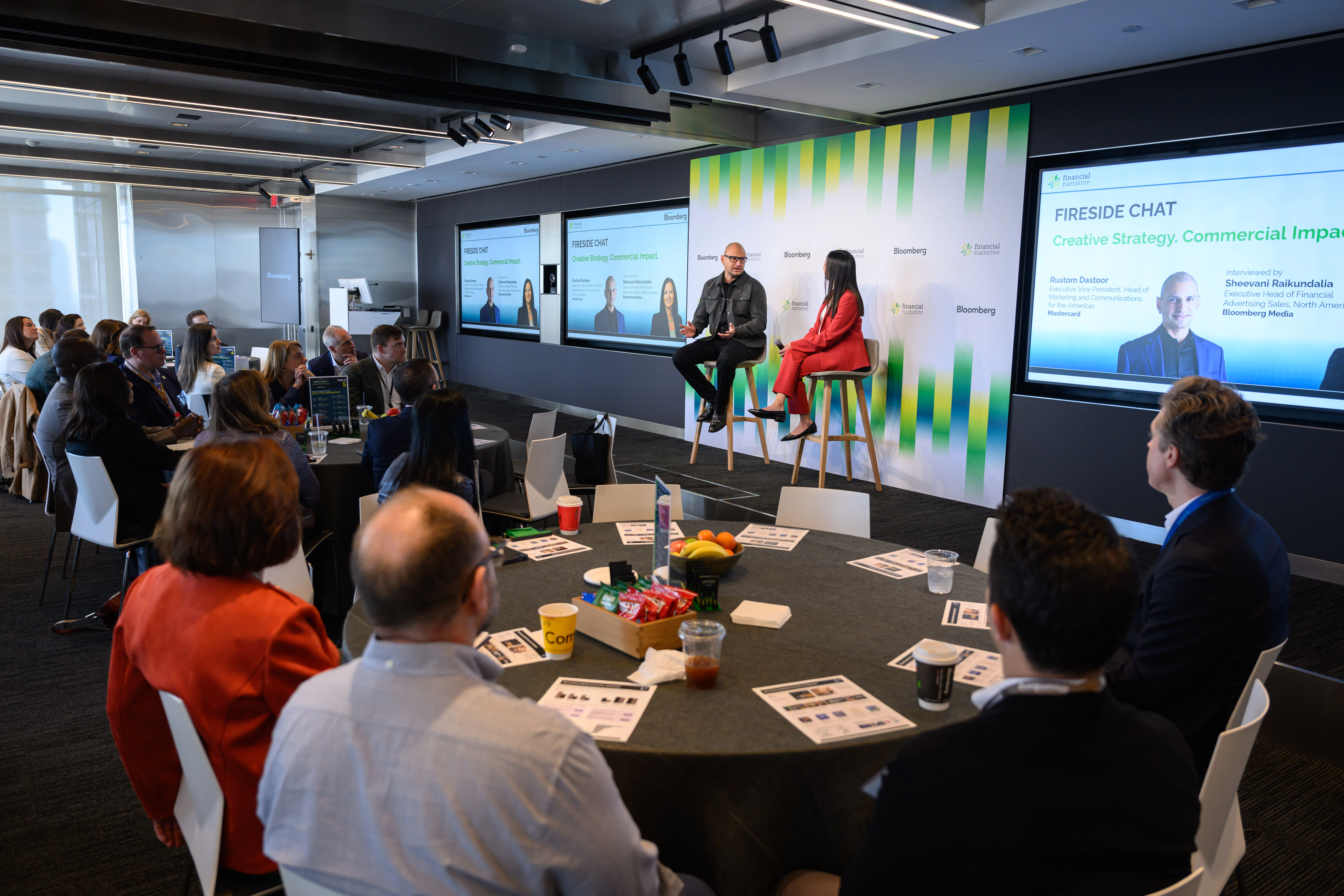 CREATIVITY AS PROBLEM SOLVING
Creativity was framed not as a department but as a discipline. In financial services, it means taking complex topics and making them simple enough to drive action.
One standout example involved a retirement income product brought to life through a cultural hook that made the concept instantly relatable, a campaign that has since extended across sales enablement, events and ongoing media partnerships.
Several speakers pushed back on the instinct to assess only the risk of doing something bold, arguing that the more important question is the risk of not doing it. Compliance was reframed as a creative constraint that produces better work when engaged early rather than treated as a final gate.
AI: FROM EFFICIENCY TO TRANSFORMATION
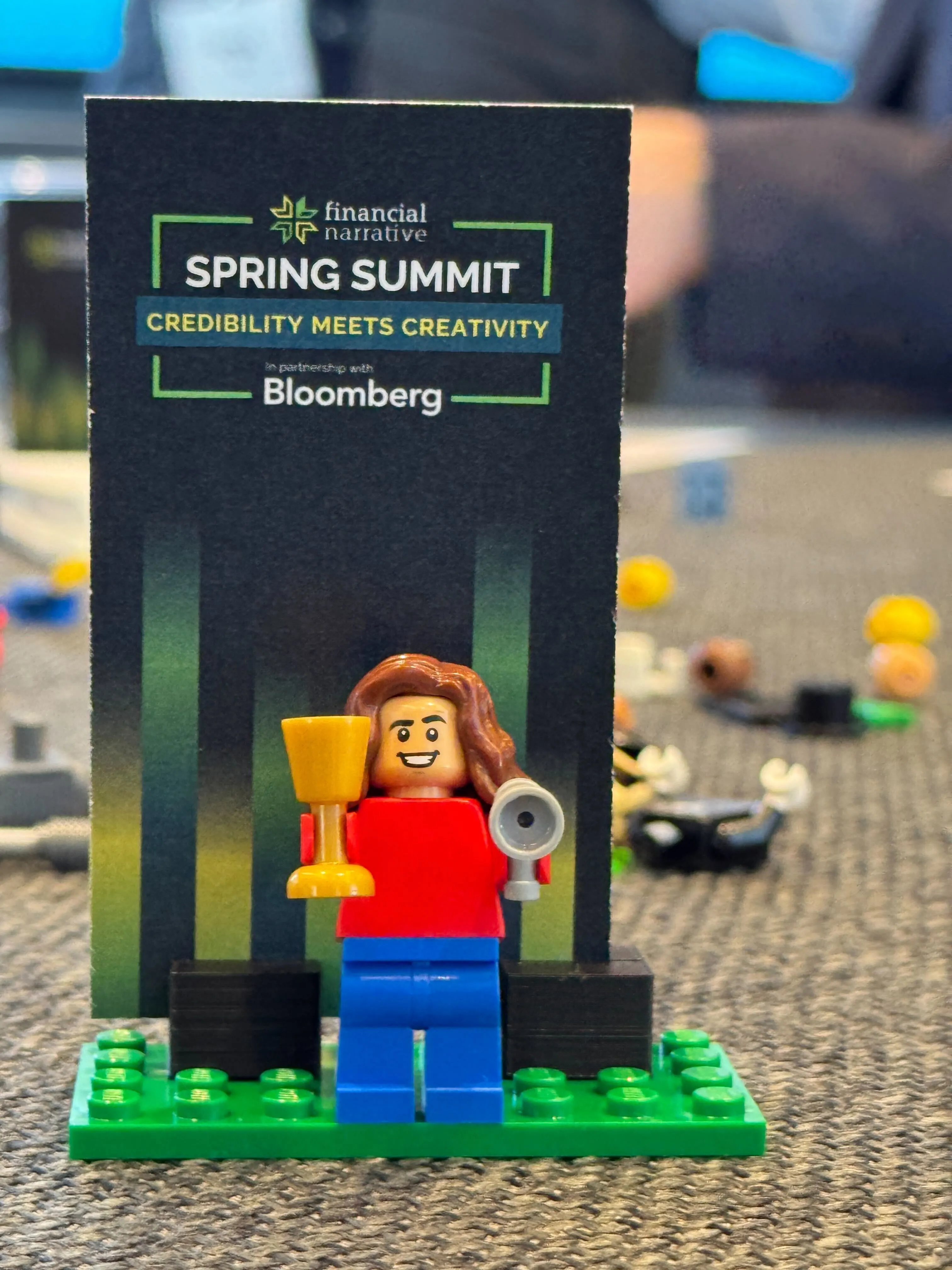
The AI conversation moved well beyond experimentation. Panelists described organizations where AI is embedded across marketing, compliance, HR and content production, with named AI agents treated as functional colleagues.
Baseline efficiency gains of 10 to 15 per cent were cited for using AI as a tool, but the real shift is in process transformation: rethinking entire workflows rather than layering AI onto existing tasks.
Measurement remains largely efficiency-based, with harder outcome measures still emerging. Speakers were candid about risks: hallucinations, invented data and a tendency for eager users to skip checking. The consensus was that expert human oversight is non-negotiable. Governance structures are evolving, with most organizations now running cross-functional AI boards and dedicated security protocols, but the regulatory literature has not caught up.
A recurring concern was the impact on junior talent. AI is automating many entry-level tasks, raising questions about how the next generation will develop judgment and instinct. Leaders are responding with cross-training, rotational programmes and global knowledge-sharing, but the tension between efficiency and development remains unresolved.
EXECUTIVE VOICE: AUTHENTICITY AS STRATEGY
A breakout session on executive brand-building explored the fine line between authenticity and performance. Attendees discussed cases where senior leaders had built strong public profiles only to undermine them with content that felt forced or off-brand.
The consensus was that the best executive communications balance personal voice with strategic intent, and that data can help make the case internally, with one participant describing a direct correlation between negative media moments and stock price movement.
Internally, treating employees with the same production quality as external audiences was cited as a driver of engagement. Middle management was flagged as a critical relay point: without clear messaging from above, managers fill the vacuum with their own narratives.
DATA, CONTENT AND THE COLLAPSE OF DISCOVERY
A dedicated session on content strategy reinforced that branded content must serve before it sells. Audiences in financial services are sophisticated and immediately sensitized to promotional intent. The brands that break through deliver genuine utility through data-led insight, human storytelling and speed of response.
With traditional search declining and LLMs increasingly mediating brand discovery, content architecture and platform presence are becoming critical. One participant described a 30 per cent drop in web traffic but noted that arriving visitors are far more engaged, prompting a pivot to conversion-focused content. Others are investing in LLM optimization, reattributing content to credentialed authors and producing proprietary comparatives to influence how AI models surface their brand.
THE CMO ROLE: GROWTH AND CONNECTION
The closing roundtable confirmed that growth, broadly defined to include revenue, reputation, talent and enterprise value, is the irreducible core of the CMO mandate. Where marketing cannot demonstrate its contribution to growth, the function is quickly diminished.
Earning a strategic seat requires learning the product deeply, building relationships across finance and product teams, and demonstrating value through small wins before attempting systemic change. Team structures are evolving, with some organizations building offshore execution capacity while redeploying domestic teams toward strategy. The most important metrics are business outcomes, not marketing outputs, and the discipline of agreeing on those metrics with the business before any campaign launches was emphasized repeatedly.
The day closed with confidence that the CMO role is not only surviving but becoming more essential. The convergence of brand, data, risk, culture and growth demands leaders who can operate across all of those dimensions, and the room was full of them!
Our special thanks to this incredible lineup of marketing leaders:
> KIM ROSENBLUM, CHIEF MARKETING OFFICER, BETTERMENT
> LAUREN BUSCH, GLOBAL HEAD OF PAID MEDIA, BLACKROCK
> MICHAEL MARINELLO, MD, GLOBAL HEAD OF COMMUNICATIONS AND ANALYST RELATIONS, J.P. MORGAN PAYMENTS
> MICHAEL WALKER, GLOBAL EXECUTIVE EDITOR, BLOOMBERG MEDIA
> MICHELLE LYNN, HEAD OF GLOBAL DATA SCIENCE AND EFFECTIVENESS, BLOOMBERG MEDIA
> OLIVIA DOUGLAS, HEAD OF BRAND, INNOVATION AND CONTENT, CITI
> RUSTOM DASTOOR, EVP, MARKETING AND COMMUNICATIONS, AMERICAS, MASTERCARD
> ALYSSA GILMORE, CHIEF OPERATING OFFICER FOR COMMUNICATIONS, BLOOMBERG
> ASHISH VERMA, GLOBAL HEAD OF BLOOMBERG MEDIA STUDIOS, BLOOMBERG MEDIA
> BINNA KIM, GROUP CEO AND CO-FOUNDER, VESTED > DYLAN RIDDLE, HEAD OF COMMUNICATIONS, AMERICAS, DEUTSCHE BANK > ERIC HAZARD, HEAD OF STRATEGIC ALLIANCES, VESTED
> ESTI BUSKIN, HEAD OF RETIREMENT MARKETING, NUVEEN
> JACQUELINE GOGEL, MANAGING DIRECTOR, VESTED
> JEN BALL, GLOBAL CHIEF MARKETING OFFICER, FRANKLIN TEMPLETON
> JENNIFER HENDRICKS SULLIVAN, SVP, CHIEF COMMUNICATIONS OFFICER, FIFTH THIRD BANK
> JOEY CASTILLO, HEAD OF THE INSTITUTIONAL CLIENT MARKETING GROUP, PGIM
> JULIE MURAWSKI, PARTNER, CHIEF MARKETING OFFICER, COHNREZNICK
> KATE ARDINI, CHIEF MARKETING OFFICER, MARINER
> SHEEVANI RAIKUNDALIA, EXECUTIVE HEAD OF FINANCIAL ADVERTISING SALES, NORTH AMERICA, BLOOMBERG MEDIA
Join the conversation
Designed as a quick temperature check on the evolving attitudes and priorities of marketing and communications leaders in financial services, this 5-minute INDUSTRY PULSE invites you to share your perspective on how organizational structures are shifting across the industry.
Click here to share your insights >>>
