
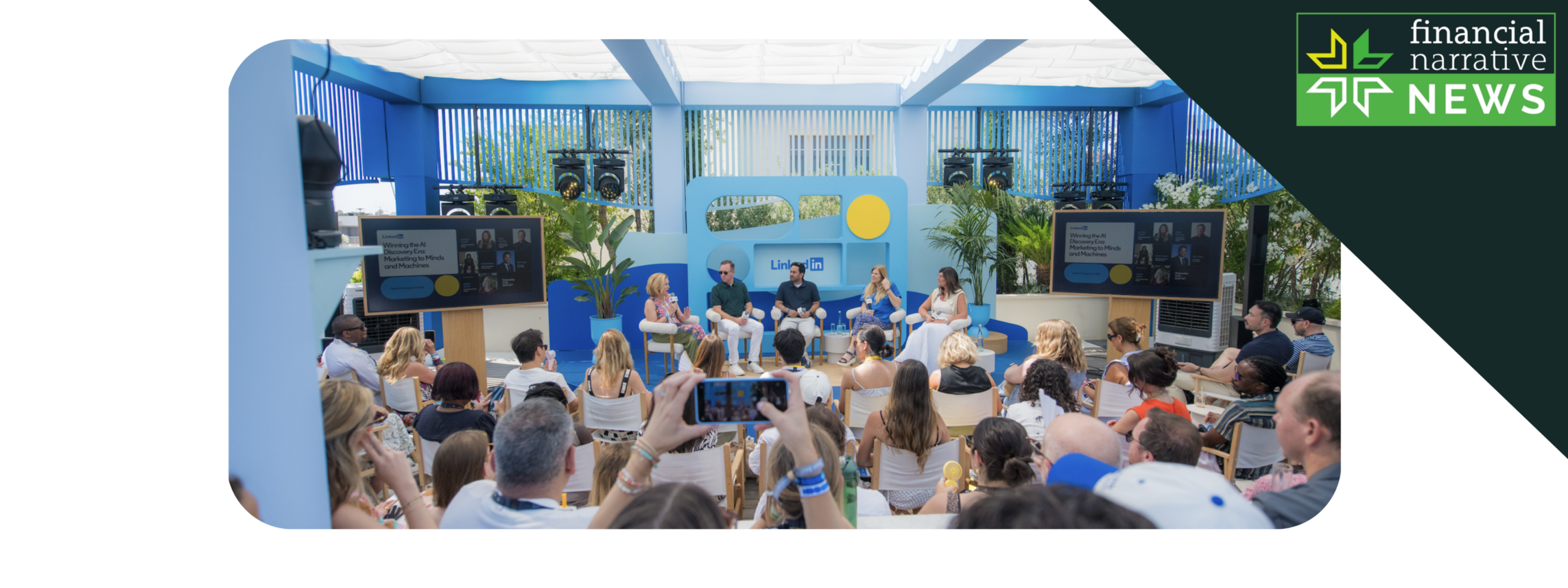
LinkedIn: Five CMOs at Cannes Lions Said the Real AI Challenge Is People
Writing for LinkedIn's marketing blog, Global Head of Content Yolanda Zaw distills conversations with marketing leaders from Google, OpenAI, JPMorganChase, HP, Asana, Salesforce, Dropbox and others at Cannes Lions 2026 into a single shift: marketing is moving from an attention economy to an intelligence economy.
The framing came from Colin Fleming, CMO of Business at OpenAI: "We've been coming to Cannes for many years now and have seen this attention economy at its finest. It's created the most amazing work focused on attention-grabbing behavior. But I think we're entering this intelligence economy where it's about usefulness." As LLMs become the gatekeepers of discovery, visibility is no longer earned by publishing more. It is earned by being cited, referenced, recommended and trusted.
On skills, the consensus across speakers was that AI is increasing the value of distinctly human capabilities rather than reducing them. Fleming reframed AI as a creativity and curiosity challenge: "The technology is infinitely capable now. It's no longer a limitation. It's: can we query it in the most interesting way? Can we stretch the brain and get curious enough to really push it to the next level?" Carla Hassan, CMO of JPMorganChase, described the leaders who will succeed as those who can connect the dots, see patterns across disciplines, and understand how one action impacts someone else's work and ultimately the business. Liz Armistead of Dropbox put the creative argument plainly: "Taking the time to hone your perspective and have a unique point of view is the true differentiator of brands in this new era." John Zissimos, Chief Brand and Creative Officer at Salesforce, brought it back to fundamentals: "The moment you take your eyes off your real purpose, helping your customer succeed, you're not going to do great marketing."
The harder conversation was about people rather than tools. Shiv Singh described what is happening beneath the surface in many organisations: "We're seeing what I refer to as work identity shifting. People aren't sure what their jobs will look like in the future. They're not sure they'll be as valuable as they once were. It's creating a real uneasiness." Lorraine Twohill of Google was direct about the leadership response required: "We're all on this high-speed learning curve. None of us are experts. We're still having to completely transform how we work and bring our entire organization through this journey." Carla Hassan stressed the importance of structured environments for experimentation rather than simply asking teams to figure it out.
The closing argument came from Prashi Gore, CMO of Asana: "The pace of change is forcing us to think differently about a lot of things, but in some ways just go back to the basics: what does the buyer care about?"
The seven lessons Zaw distills from the week:
- Visibility is becoming an outcome of credibility, not presence
- Winning discovery requires an ecosystem of customers, creators, employees, partners and communities, not just a website
- The brands that create the most trusted conversations will outperform the brands that create the most content
- AI is accelerating the value of distinctly human skills: creativity, judgment, taste, storytelling and relationship-building
- Future marketing leaders will be connectors who spot patterns, link ideas and align teams
- Organisations that learn fastest will win fastest, and the biggest opportunity is building a culture of experimentation and curiosity
- The most durable strategy remains the simplest: understand your audience, solve real problems, create genuine value
Full story: LinkedIn Marketing Blog.