
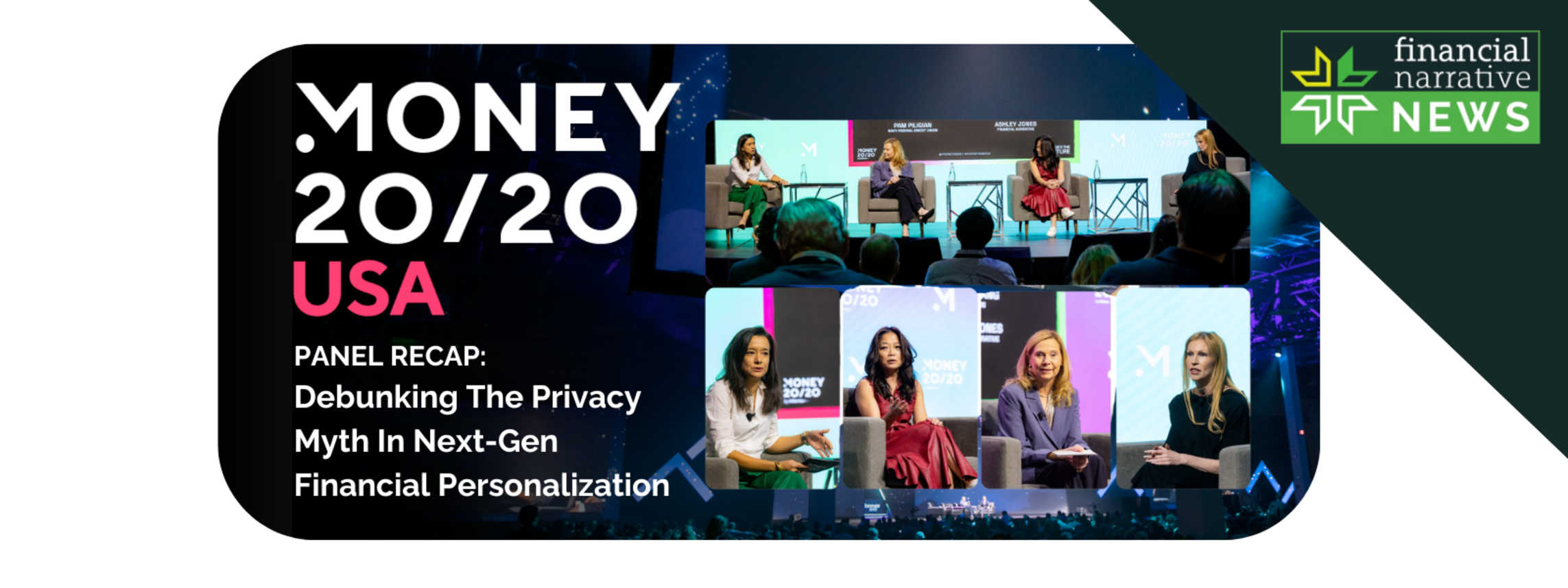
Panel Recap: Debunking The Privacy Myth In Next-Gen Financial Personalization
At Money20/20 in Las Vegas, a panel of marketing leaders tackled one of finance’s toughest balancing acts: personalization without overreach.
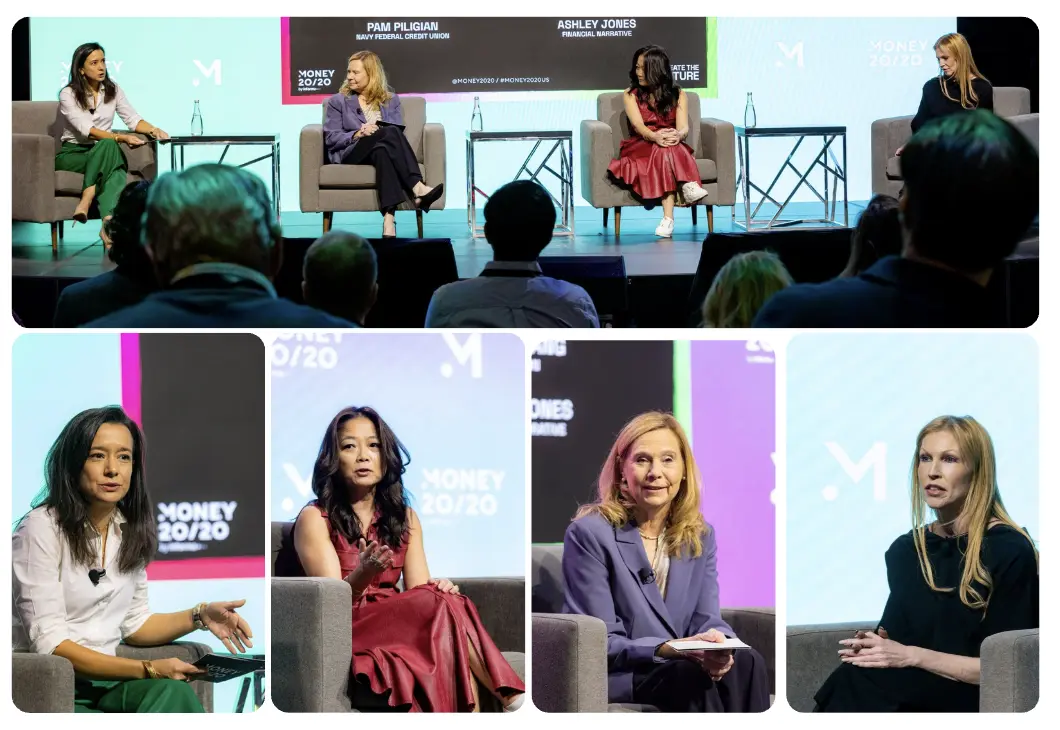
Moderated by Financial Narrative’s Ashley Jones, Debunking the Privacy Myth in Next-Gen Financial Personalization explored how brands can turn data use into a trust advantage rather than a risk. The speakers agreed that the future of personalization isn’t about knowing more, it’s about knowing better.
How Are Financial Brands Making Personalization Work Without Crossing Privacy Lines?
Moderator Ashley Jones, Head of Financial Narrative, opened the discussion by noting that the same technology enabling hyper-personalized experiences can make customers feel “watched.” The goal, she said, is to create meaningful relevance without breaching comfort zones.
Karin Levi, Head of Financial Services Marketing at LinkedIn Sales Solutions, shared an example from a global asset manager targeting both high-net-worth investors and financial advisors. Instead of a one-size-fits-all campaign, the brand used LinkedIn’s platform to build distinct audience segments—HENRYs on one side, advisors on the other. Investors received content about market outlooks and investment strategies, while advisors saw client-retention and relationship-building insights. Sales teams then deepened those interactions using Sales Navigator, tracking job changes and sending personalized InMail follow-ups tied to the content each user had already engaged with.
“Marketing created the air cover and sales closed the loop,” Levi said, noting that users who personalized outreach saw response rates up to 250 percent higher.
Pam Piligian, Chief Marketing Officer at Navy Federal Credit Union, pointed to segmentation work revealing how privacy sensitivities vary widely. Some members welcome targeted alerts, while others prefer to opt out entirely. “People want personalization—but they want it on their terms,” she said. Navy Federal’s developing a preference center where members can choose the types of communications they receive, from low-balance alerts to credit-milestone reminders. “It’s our responsibility to show we know them, not that we’re watching them.”
Robin Zhang, Head of Enterprise Marketing at MoneyLion, described how financial apps are turning into personalized media destinations. AI-curated content feeds in investment-tracking apps now tailor thought leadership and advice to each user’s portfolio, linking seamlessly to advisors in-app. “It creates a content-to-conversation loop that keeps clients engaged and builds trust daily,” Zhang said.
Where Are Customers Willing To Trade Privacy For Personalization?
Asked where customers are comfortable sharing data, the panelists agreed that transparency drives trust, not volume.
Piligian shared research showing younger members are generally more open to data sharing if they clearly see the benefit. “We find members are willing to opt in when personalization feels like service—helping them reach a goal or avoid a problem,” she said.
Zhang emphasized that AI has changed the trade-off equation altogether. “AI-driven personalization isn’t inherently invasive,” she said. “Modern systems can deliver relevance without identity.” She explained how federated learning allows AI models to train locally on devices so that personal data never leaves the user, and how synthetic data creates realistic behavioral patterns without exposing real identities. “It’s not about giving up privacy—it’s about smarter engineering.”
Levi added that customers today expect transparency from financial brands. “They want to know what’s collected, how it’s used, and what they get in return. If you explain the value clearly, they’ll often share more willingly.”
What Role Should Customers Play In Shaping Their Own Personalization Experience?
Levi observed that personalization used to be entirely brand-driven; companies decided what to deliver, and customers received it. “Now, people want to co-author the experience,” she said. On LinkedIn, that shift means creating spaces where users can set topic preferences and influence their feed. “Younger audiences, especially Gen Z and Millennials, expect a say in how data shapes their world.”
Piligian echoed the theme, describing Navy Federal’s “opt-in by design” philosophy. “Choice is the foundation of trust. When members decide what’s right for them, it deepens the relationship.”
Zhang agreed and said customer control will be key to keeping personalization sustainable. “The next generation of personalization will be less about collecting everything and more about using what we already have in meaningful ways,” she said.
How Are Financial Brands Building Trust While Driving Business Results?
Zhang emphasized that transparency and education should be treated as core marketing functions. “We have to teach people how AI is used—what data powers it, how it’s protected, and what value it delivers,” she said. When customers see responsible design principles in action, she added, privacy becomes a brand advantage rather than a compliance task.
Levi said LinkedIn’s research shows that authenticity and clarity drive both trust and ROI. “When you communicate openly about how personalization works, it actually increases engagement. Customers reward honesty.”
Piligian pointed out that trust doesn’t happen instantly. “It’s built over time through consistent delivery. You can’t just say you respect privacy—you have to prove it with every message and every click.”
What’s Next For Personalization And Privacy?
In the final exchange, the speakers looked ahead to how personalization will evolve.
Piligian predicted a “yes-and” era—where customers expect both personalization and privacy simultaneously. “Generational differences will continue to shape how far brands can go, but the expectation of relevance is here to stay.”
Levi said the next phase will focus on intentional data sharing—people offering information only when they see meaningful value. “It’s not about more data, it’s about smarter use of the data we already have.”
Zhang closed with what she called the “flywheel effect.” As customers see tangible value from personalization, their trust increases, which makes them more open to sharing insights that drive even better experiences. “Better experiences build more trust, and more trust fuels better personalization. That’s the cycle to design for.”
The Takeaway
Moderator Ashley Jones concluded that personalization and privacy no longer sit at opposite ends of the marketing spectrum. They’re now mutually reinforcing. The brands winning in 2025 aren’t collecting more; they’re using less, better. Transparency, consent, and customer value have become the new growth levers for personalization done right.