

Is “Reach Sufficiency” Obsolete? Oxford Study Challenges Media Buying Norms
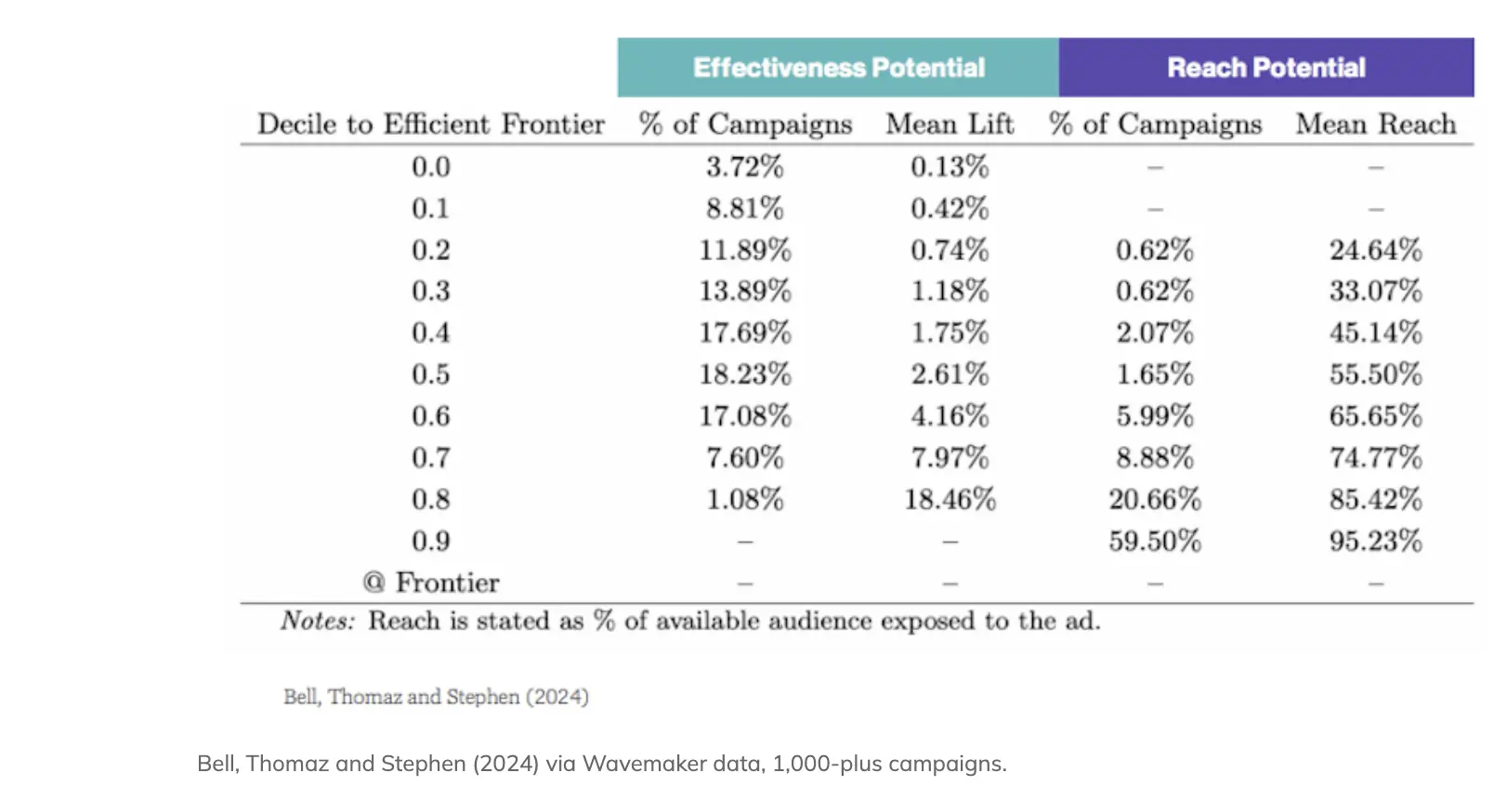 Snapshot: Associate Professor Felipe Thomaz of Oxford’s Saïd Business School is questioning long-held beliefs in media buying with his study suggesting that reach alone doesn’t drive business outcomes. His findings, drawn from over a thousand campaigns and a million customer journeys, reveal that only 1% of campaigns achieve meaningful ROI when optimized solely for reach.
Directly challenging the core work of the Ehrenberg-Bass Institute and Professor Byron Sharp’s most famous book, How Brands Grow, Thomaz proposes that media plans should consider "influenceability" and cross-channel effectiveness based on each channel’s unique impact on different consumer categories.
For example, while TV ads influence 50% of personal care buyers, they have just a 2% effectiveness rate in the auto category. His research also points to higher ROI potential when media mixes are designed around nuanced, category-specific strategies. Thomaz’s forthcoming paper aims to shift the focus from simplistic reach-based models to smarter channel planning, which he believes can boost campaign performance from 2% to as much as 18%.
Key Quote: “The original [Ehrenberg] model requires stationary markets … It requires that your market share is not changing, and it requires that the products are undifferentiated. You're making suggestions of how to change market share on the basis of a model that cannot handle change, or whose main assumption is that the market share won't change. So that’s a problem." Felipe Thomaz, Associate Professor, Saïd Business School at Oxford.
Full story: Mi3