
The Platform Trust Advantage: Why Participation Beats Persuasion (2026 Outlook)
Contributed by Dr. Leeya Hendricks, Chartered Marketer (FCIM). Author of The Platform Playbook: The Marketer’s Guide to Designing, Scaling and Leading Platform Growth (Palgrave Macmillan, 2026) and Financial Narrative Member since 2023.
As we step into 2026, the organisations that will lead - across financial services, fintech, wealth and asset management - will be those that master participation, not persuasion.
For decades, persuasion and controlled messaging shaped how organisations guided customers through structured funnels. This made sense when information was scarce, channels were limited and institutions held the balance of knowledge.
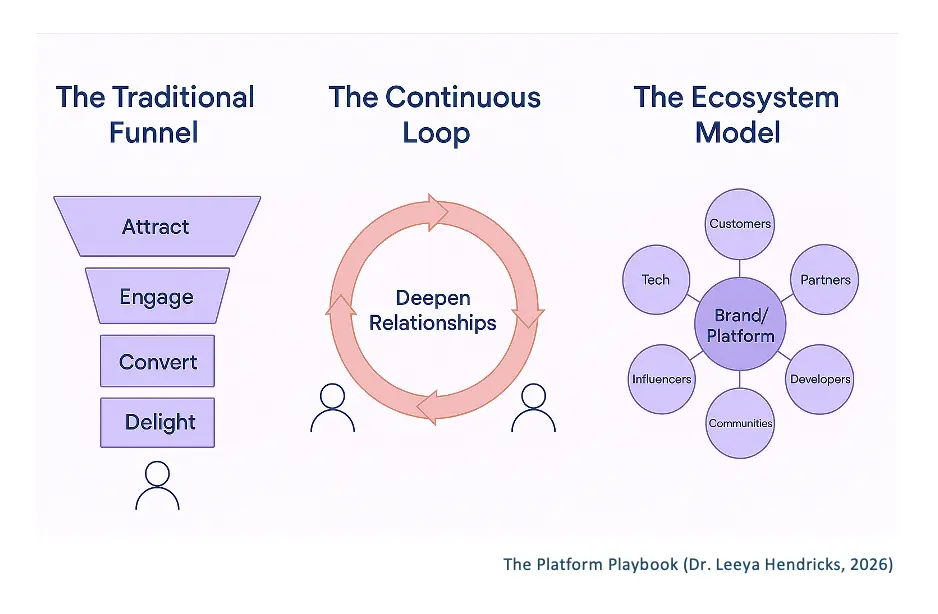
But that world no longer exists. Funnels are built for persuasion. Ecosystems are built for participation. And participation is fast becoming the new trust.
The Rise of Networked Decision-Making
In 2026, decisions in complex, regulated markets rarely move in a straight, sequential pattern. Instead, they unfold across interconnected networks of influence, often far beyond the brand’s direct reach.
Customers now triangulate insights across platforms, peers and performance data. Advisers and wealth managers validate decisions in real time. Fintech ecosystems power journeys behind the scenes. Content, recommendations and user communities shape expectations. Regulation and transparency requirements reshape how trust is formed.
This is no longer a funnel - it is an ongoing, dynamic system of interactions.
Ecosystem thinking becomes a strategic differentiator because it acknowledges how people actually make decisions today. Instead of forcing individuals into a linear path, ecosystem-led marketing enables multiple actors to interact, contribute and co-shape value.
This is where marketing becomes transformational. Not by pushing messages, but by designing the interfaces, touchpoints and shared spaces where customers choose to participate:
- Spaces where they learn with you, not from you
- Tools that invite input, not passive consumption
- Journeys shaped through collaboration, not control
- Transparency that strengthens trust, not risk
- Multi-actor engagement that mirrors how decisions truly unfold
Participation creates a sense of agency, clarity and confidence that persuasion alone cannot deliver.
Signals Shaping the Shift in 2026
Market signals are accelerating the shift from persuasion to participation. Accenture reports that more than 70 percent of decision-makers now benchmark experiences against digital platforms, while FintechFutures forecasts embedded finance to exceed $600 billion in global revenue by 2025. Alongside this, rising regulatory expectations for transparency and customer involvement across Europe and the UK are pushing firms to design journeys where trust is co-created, not simply conveyed.
Insights from The Platform Playbook echo these shifts. In a case study involving a leading European stock exchange and a global digital experience platform supporting its ecosystem expansion, value creation increasingly stemmed from multi-actor resource integration rather than single-firm control. Complementors and institutional partners became core contributors through shared data and co-designed workflows, revealing that engagement in regulated markets is dynamic, cyclical and shaped by perceived value. Trust strengthened when participants could shape interactions, influence flows and understand decision logic. These combined signals underline why participation is emerging as the new trust architecture for 2026.
Breaking Rigidities and Thinking Differently
To unlock participation, organisations must confront the rigidities that shaped the old model. The silo between marketing and product. The friction between innovation and compliance. The hierarchy that slows responsiveness. The processes built for governance, not collaboration. The belief that trust comes from control, rather than clarity.
These structures made sense in a funnel-driven era - a time when organisations directed the journey. But in an ecosystem-driven environment, they suppress innovation, disconnect teams and limit responsiveness.
Thinking differently means redesigning how value is created. It requires removing operational barriers that limit collaboration, creating shared structures that allow product, data, tech, compliance and customer teams to co-create, and building cultural confidence to work fluidly across boundaries.
It also demands that leaders adopt a platform mindset - one that views customers as participants, not endpoints, and partners as co-creators, not suppliers. This shift encourages speed, resilience and adaptability, which are essential in volatile markets and shifting regulatory landscapes.
The organisations that break these rigidities will be the ones positioned to scale trust, deepen engagement and unlock new forms of value in 2026.
The 'So What' for Modern Marketers
In the year ahead, growth will increasingly come from how well your organisation can:
>> Encourage participation - enabling customers, partners and advisers to actively shape their journey
>> Design collaborative interactions - from onboarding to service to long-term value creation
>> Support multi-actor decision journeys - recognising that influence sits across networks, not funnels
>> Build ecosystems that feel safe, compliant and empowering - a critical differentiator in regulated markets
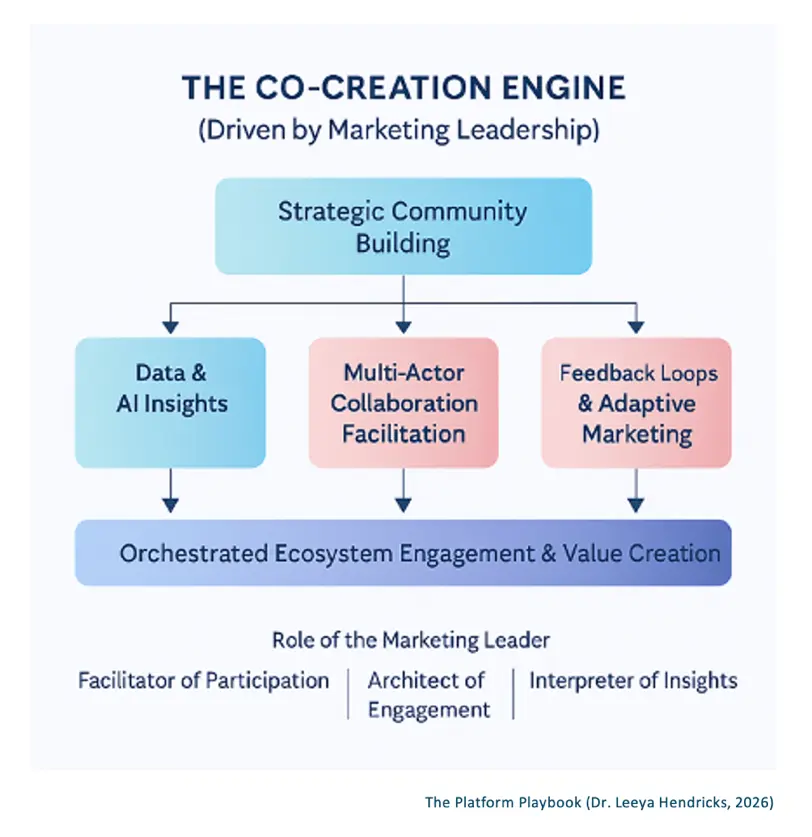
>> Shift from messaging to orchestrating - aligning product, compliance, tech, data and frontline teams around shared value
>> Use data to create participatory intelligence - co-created insights, scenario planning and personalisation that build trust
>> Evolve the role of marketing from communicator to connector - the architect of engagement across the entire ecosystem
This shift is no longer theoretical - it is rapidly determining the leaders and laggards of the sector.
The organisations that embrace ecosystem design - participation, contribution and co-creation - will grow faster, differentiate more meaningfully and build deeper trust in markets where clarity and confidence matter.
This is the move from control to collaboration. From persuasion to participation. From funnels to ecosystems.
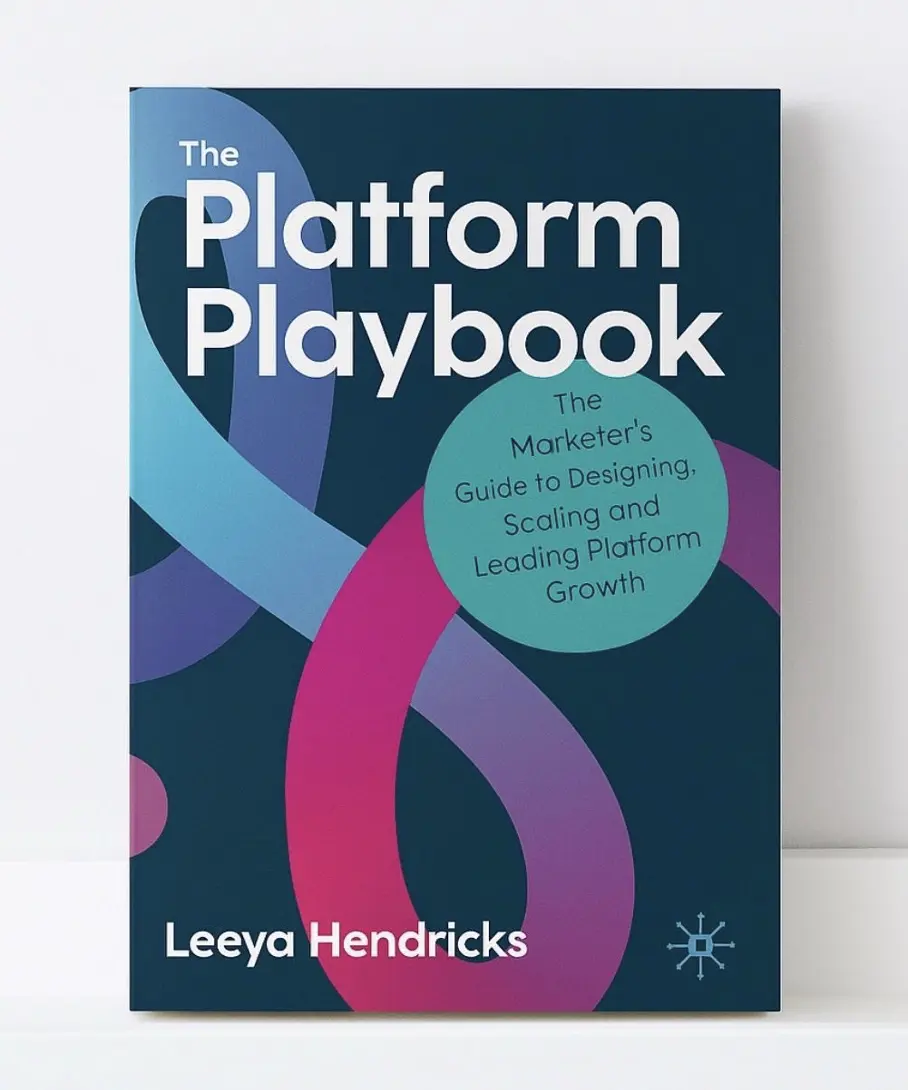
And it is the shift The Platform Playbook prepares marketers, leaders and ecosystem builders to lead.
Visit www.marketersplatformplaybook.com for more.