
Spring Forum: Teams, Talent, Tools & Transformation
Senior marketing and communications leaders gathered for Financial Narrative's Spring Forum on May 12 to confront one of the industry's defining tensions: the line between marketing and communications. Across two panels, a keynote conversation and breakout groups, the message was consistent that maintaining such imaginary lines is increasingly a liability, and the organizations moving fastest are the ones that have already erased it.
>>> VIEW THE EVENT GALLERY <<<
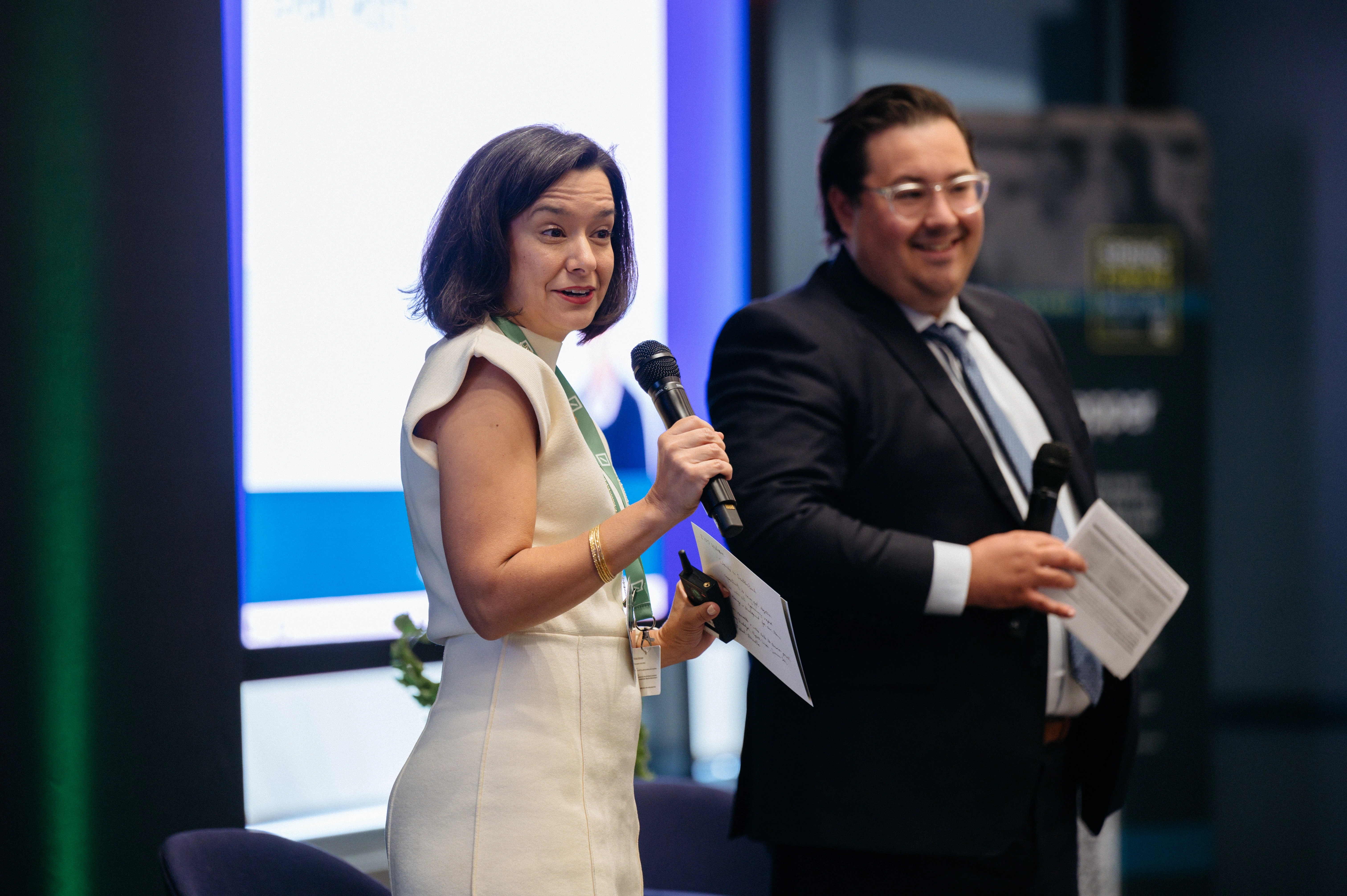 BREAKING THE MARKETING-COMMUNICATIONS DIVIDE
Panelists described a range of structural models, but shared a common conviction: siloed functions produce inconsistent narratives, and in financial services, inconsistency is risk. The discipline of establishing a central narrative architecture, one flexible enough to travel across channels and audiences without fracturing, was identified as the foundation of effective integration.
Internal communications emerged as an underinvested priority. Employees who cannot articulate the company story cannot advance it. Middle management was flagged as a critical relay point, and the importance of a single point of accountability for large, multi-faceted initiatives was emphasized throughout.
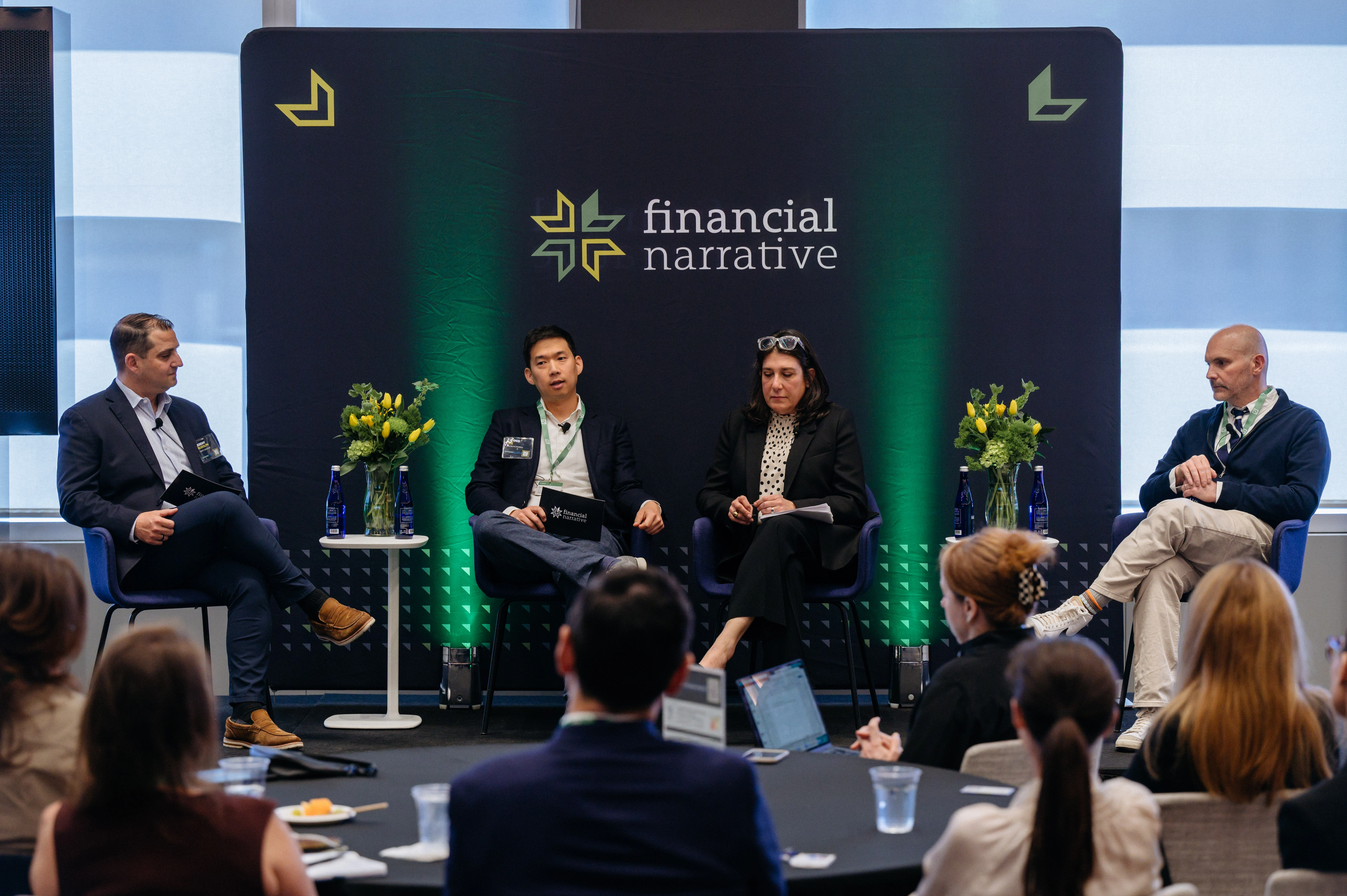 FROM DATA TO DECISION
The data-driven panel challenged the assumption that more data equals better decisions. The real discipline, participants agreed, is identifying which decisions matter and getting the right information to the right people at the right time, presented simply enough to actually drive action.
Qualitative signals were given equal standing with quantitative ones, particularly for large enterprise relationships. One example illustrated how direct research with major clients overturned internal assumptions about what those clients valued most, reshaping messaging strategy as a result. AI's role in centralizing and democratizing information across teams was discussed alongside a clear caution: without proper context, AI produces noise, not insight.

OWNING THE AI NARRATIVE
A breakout session on AI search visibility delivered some sharp data points: a significant and growing share of searches are now AI-powered, citations have a measurable half-life of just over three weeks, and relevance is the primary driver of durability. AI visibility is not a one-time optimization exercise. It requires continuous monitoring and rapid-response content.
Platform differences matter. The sources that carry authority in B2B AI environments differ from those that dominate consumer tools, and many financial services brands are underrepresented in ways they have not yet measured. The practical starting point: run your most important prompts, document where your brand appears, and treat the gaps as a content brief.
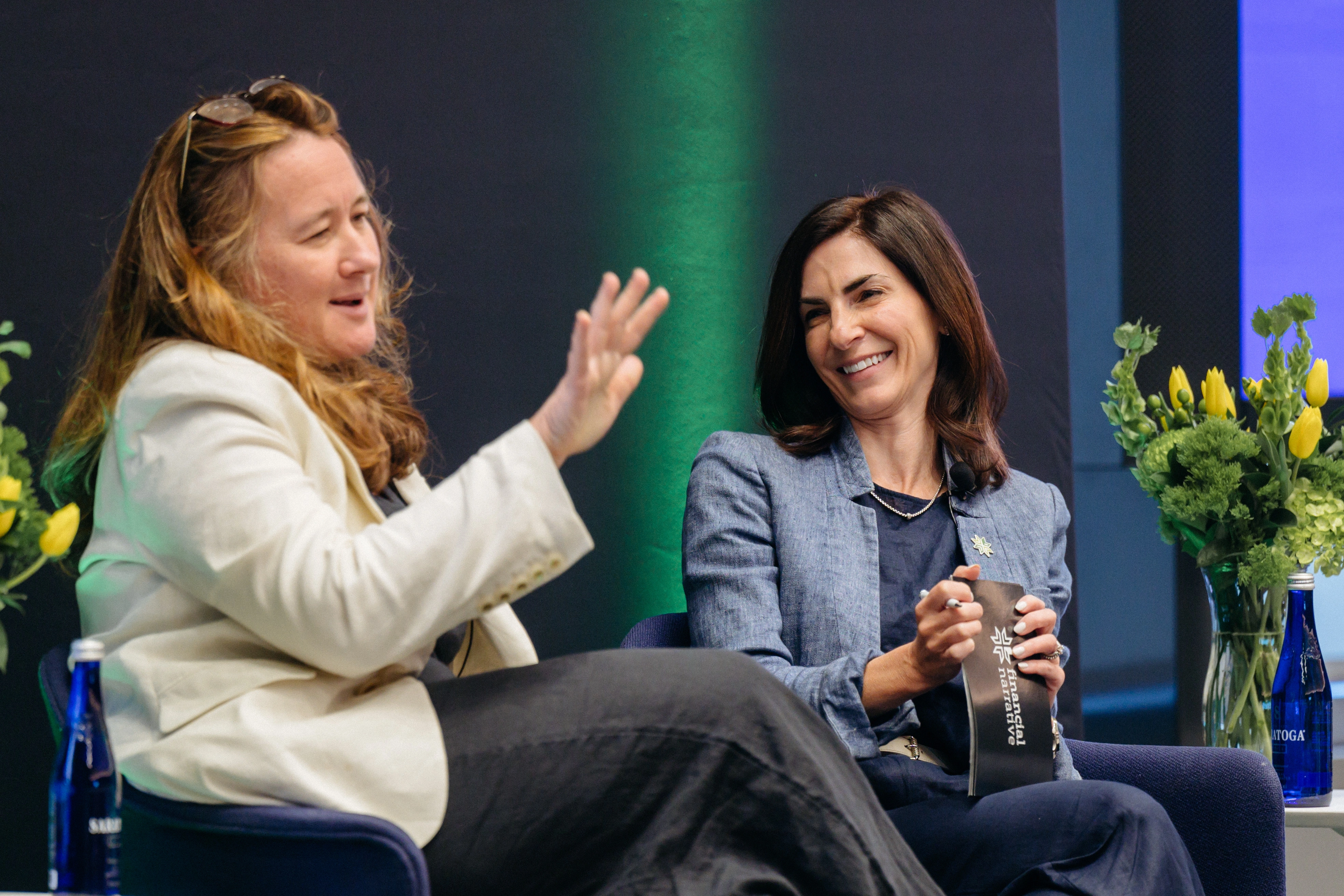 THE CONVERGENCE OF SEO, AEO AND CONTENT
The second breakout reframed search optimization as a discipline that now spans every platform where audiences form impressions, not just Google. AI search creates a hidden funnel that surfaces users as direct traffic after they have already made significant judgments about a brand, making attribution harder and early-stage visibility more important than ever.
On content structure, the session was pointed: LLMs prioritize entities over keywords, fact density over length, and structured clarity over polished prose. Proprietary data, original benchmarks and genuine point-of-view content are among the strongest tools for earning and holding citations. PR now functions as growth marketing, and consistency matters more than campaign spikes.
ARCHITECTING TEAMS FOR THE FUTURE
The closing keynote explored what it takes to transform a large, established marketing and communications function and sustain that transformation over time.
Building a shared leadership narrative, co-created with the team rather than handed down, was presented as the foundation for genuine alignment across geographically distributed organizations.
The talent question was direct: the skills that built careers in this industry are not the same skills that will carry people forward. Building versatile practitioners who can move across strategy, content, data and distribution, and investing in the structured learning programs to make that possible, is the work of leaders who intend to compete in what comes next.
Our special thanks to this incredible lineup of leaders:
> ALYSSA GILMORE, Chief Operating Officer for Communications, Bloomberg
> AMBER ROBERTS, US CEO, Vested
> DENNIS J. LEE, VP, Global and Large Marketing, Global Commercial Services, American Express
> DYLAN RIDDLE, Head of Communications for the Americas, Deutsche Bank
> ELSPETH DIXON, Managing Director, Head of Global Brand & Digital Marketing, New York Life Investment Management
> JENNIFER BABSIN, Global Head of Alternatives Marketing, Morgan Stanley Investment Management
> JEREMY RUDOLPH, General Manager, Financial Services, Banking & Insurance, Cvent | Goldcast
> KELLY VIVES, Chief Marketing and Communications Officer, Allspring Global Investments
> KISHAN PANPALIA, Founding Team & Resident AI Search Expert, Pepper
> MICHAEL IANNELLI, Head of Data Science, Scrunch
> MICHAEL MARINELLO, MD, Global Head of Communications and Analyst Relations, J.P. Morgan Payments
> MICKY ONVURAL, Chief Marketing & Communications Officer, TIAA
“I think I just built my marketing strategy for the next 3 months!”
That's real feedback from our Speed Networking event. And it's back. Your next big idea, or a fantastic contact, might be one conversation away. REGISTER NOW >>>
