

LinkedIn Rebuilds Feed Around LLMs and Sequential Behavior Modeling
LinkedIn has published a detailed account of its new feed ranking system, built on large language models and transformer architecture, that represents a significant departure from how the platform previously surfaced content.
The system, described in a technical blog post by senior engineer Hristo Danchev, now serves more than 1.3 billion members and replaces a fragmented multi-source retrieval architecture with a unified LLM-powered approach.
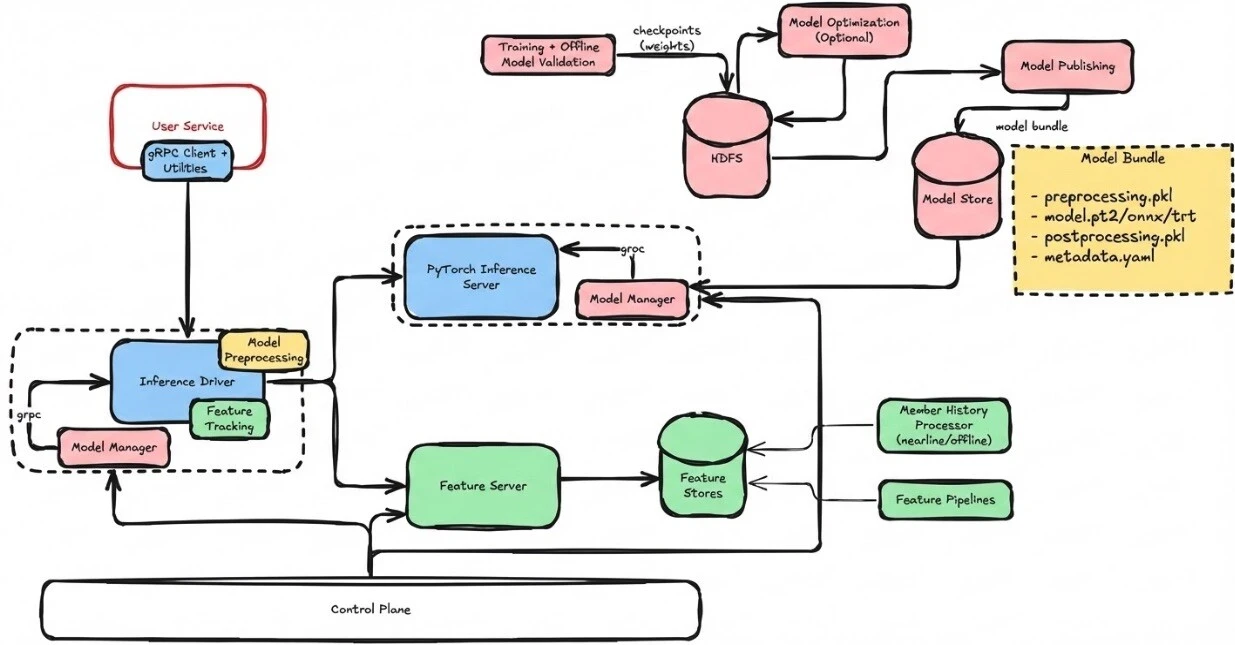
The practical change is meaningful for anyone publishing on the platform. Rather than matching posts to members based on keywords or network proximity, the new system uses language model embeddings to understand semantic relationships between professional topics.
A member who engages with posts about small modular reactors will now be surfaced content about power grid infrastructure and renewable energy integration, because the model understands those topics are professionally connected, not just lexically similar. Content from outside a member's direct network is now surfaced more readily when it matches inferred professional interests.
The ranking layer adds another layer of sophistication. Rather than scoring each post independently, LinkedIn's Generative Recommender model processes more than 1,000 of a member's past interactions as an ordered sequence, identifying trajectory and momentum in professional interests rather than static preference. A week of engagement with machine learning content followed by distributed systems posts tells the model something about where a member's focus is heading, not just where it has been.
The Content Marketing Institute adds context on the practical implications for B2B marketers. Analysis of 1.3 million LinkedIn posts found that impression-driving factors break down as follows:
- Roughly 50% is profile-based: follower history, topic consistency, and past engagement
- Around 30% comes from post performance: reactions, comments, and reposts
- 20% is outside a creator's control: timing, competition in the feed, and trending topics
Organic company content appears in just 2% of feeds compared to 31% for top personal creators. On the AI citation front, LinkedIn appears in 11% of AI-generated responses across ChatGPT, Google AI Mode, and Perplexity. Individual profiles drive the majority of citations on ChatGPT and Google, while company pages dominate on Perplexity.
The practical read is to build your LinkedIn presence around people with genuine expertise and consistent topic focus, and treat the company page more like a website than a content hub.
Full story: LinkedIn - Content Marketing Institute
“I think I just built my marketing strategy for the next 3 months!”
That's real feedback from our Speed Networking event. And it's back. Your next big idea, or a fantastic contact, might be one conversation away. REGISTER NOW >>>
