
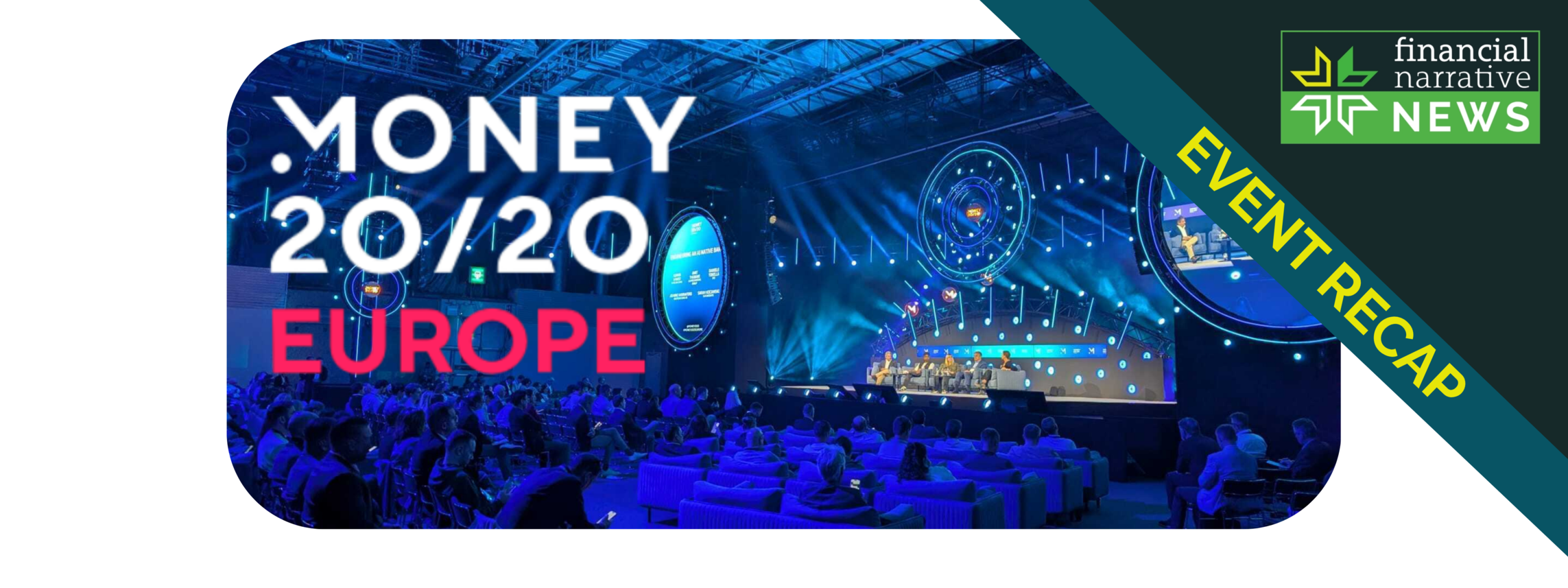
Trust Was the Real Currency at Money20/20 Europe
A couple of weeks ago I spent three days at Money20/20 Europe, inside the RAI in Amsterdam. Across all the panels, the product launches and the noise of the show floor, one theme kept surfacing, and it was not the technology. It was trust, and the people you build it with.
It helps that Amsterdam is such a brilliant city to do it in. There is something about the canals, the bikes and the easy walkability of the place that lowers everyone's shoulders and makes the conversations better. It is a city built for moving between people, which is rather the point of a week like this.
I travelled out in my role with Financial Narrative, our community for senior communications and marketing leaders in financial services, fintech and insurance. I went partly to moderate a panel and partly to do what the community exists to do: bring the right people into the same room and let the conversations happen. Mostly I listened. What I heard was an industry talking itself into a more honest conversation than it has had in some time.
The programme laddered up to four themes this year: the agentic age of AI, the great rebundling of financial services, the rewiring of the money stack, and regulation reframed as a competitive edge rather than a burden. Together they told a single story. The plumbing of finance is being rebuilt at speed, and the people building it are starting to ask who, exactly, is meant to trust the result.
On the Floor
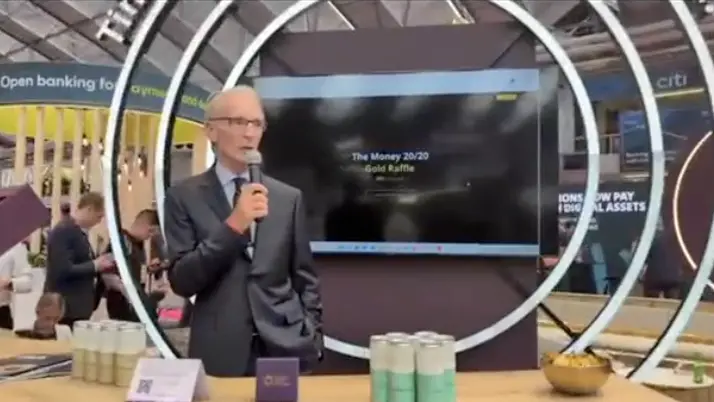 The texture of the event made the point better than any keynote. The World Gold Council ran a prize draw for a solid gold coin, and it drew the biggest crowds I saw all week. In a hall obsessed with the digital, the thing that stopped people was something real they could hold in their hand. But the real value, as ever, was the people. I met brilliant ones at every turn, from George Pitt and Meghan Canton to a long list of leaders who were generous with their time and sharp with their thinking, and the best conversations were always the ones I had not planned.
Here is the thing about events like Money20/20 that is easy to underrate. They give you and your teams the rare chance to lift your heads up from the day to day, to see what is coming, to listen properly, and to meet people you would never otherwise cross paths with. The return is remarkable, and it compounds: fresh thinking, new ideas, renewed energy, and brilliant new contacts you carry for years. You cannot manufacture that at your desk. That is exactly why a community like Financial Narrative matters. A community is not a contact list. It is a set of relationships tended over time, where people show up for one another long after the badge has gone in the bin.
The Panel: Creating Trust in Changing Technology
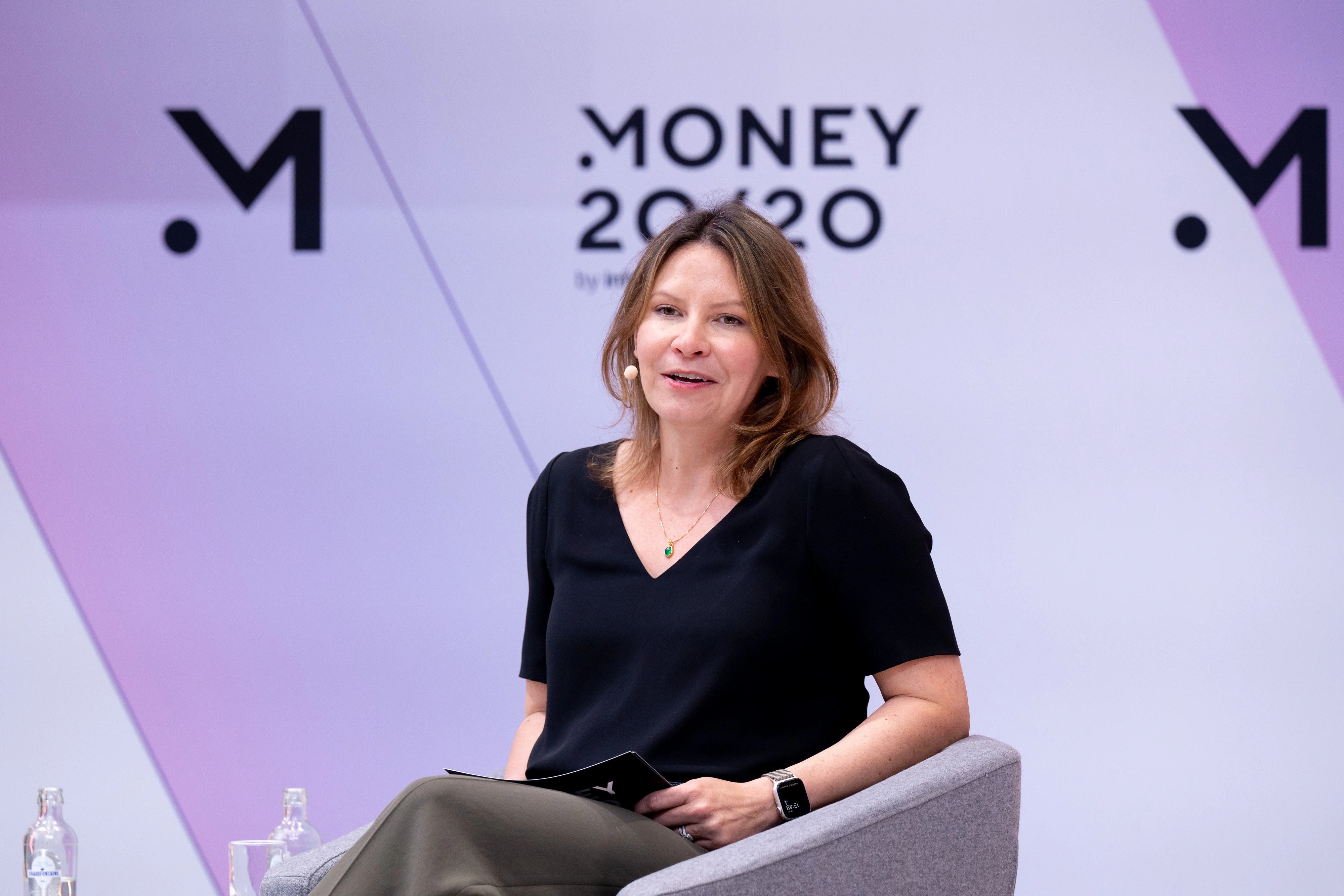 All of which led to the moment the trip was built around. On the Thursday, I moderated a panel on The Intersection Stage titled "Creating Trust in Changing Technology", with Mathieu Limousi, Chief Marketing Officer at Thunes, Lucy Cafferkey of Starling Bank, and Stephanie Cadman of the World Gold Council.
The argument we built the session around was simple, and I think true. In financial services, trust is the product now, not the technology. Banking is more trusted than it has been in years. The technology we keep putting inside it is not, and closing that gap is the work. As I put it to the room, customers do not need to understand how the technology works. They need to know what happens to them when it does.
What made it land was three people making the same move from three very different starting points. Mathieu on where trust really sits inside an organisation, and why it cannot simply be a line the marketing team writes. Lucy on what it takes to earn trust through a screen, when there is no branch to walk into and the whole relationship lives on a phone. Stephanie on whether the oldest trust there is, the trust we place in gold, survives when the metal moves onto new digital rails and more people own it without ever touching it. Artificial intelligence ran through all of it, quietly testing every assumption underneath.
I closed by asking each of them for the single thing on trust they would stake their name on. The line I took away was that trust is everyone's, or it is no one's. It is not a department. It is not a feature you ship. It is the sum of every promise an institution keeps when no one is watching, and it is built person by person, relationship by relationship.
What Comes Next
That is the thread I am carrying back into the work at Financial Narrative, and into the events we are building. Only yesterday we hosted our Earning the Room event in London. We have more coming through the autumn, and our annual summit takes place at the Charlotte Street Hotel on 24 November. Each one exists for the same reason Money20/20 does: to get brilliant people in a room, heads up, listening, and leaving with more than they came with.
I came home tired, which is the right way to come home from Amsterdam, and convinced of one thing. The most advanced idea at a conference full of advanced ideas was the oldest one in the business. Trust is earned in person, kept over time, and held within a network that keeps showing up. Everything else is detail.
A special thanks to Suman Hughes, Lucy Cafferkey, Stephanie Cadman, Vanessa Schotes and Sarah Baker for taking the time to be interviewed for Financial Narrative. Keep an eye on the channel for the post-event content to come.
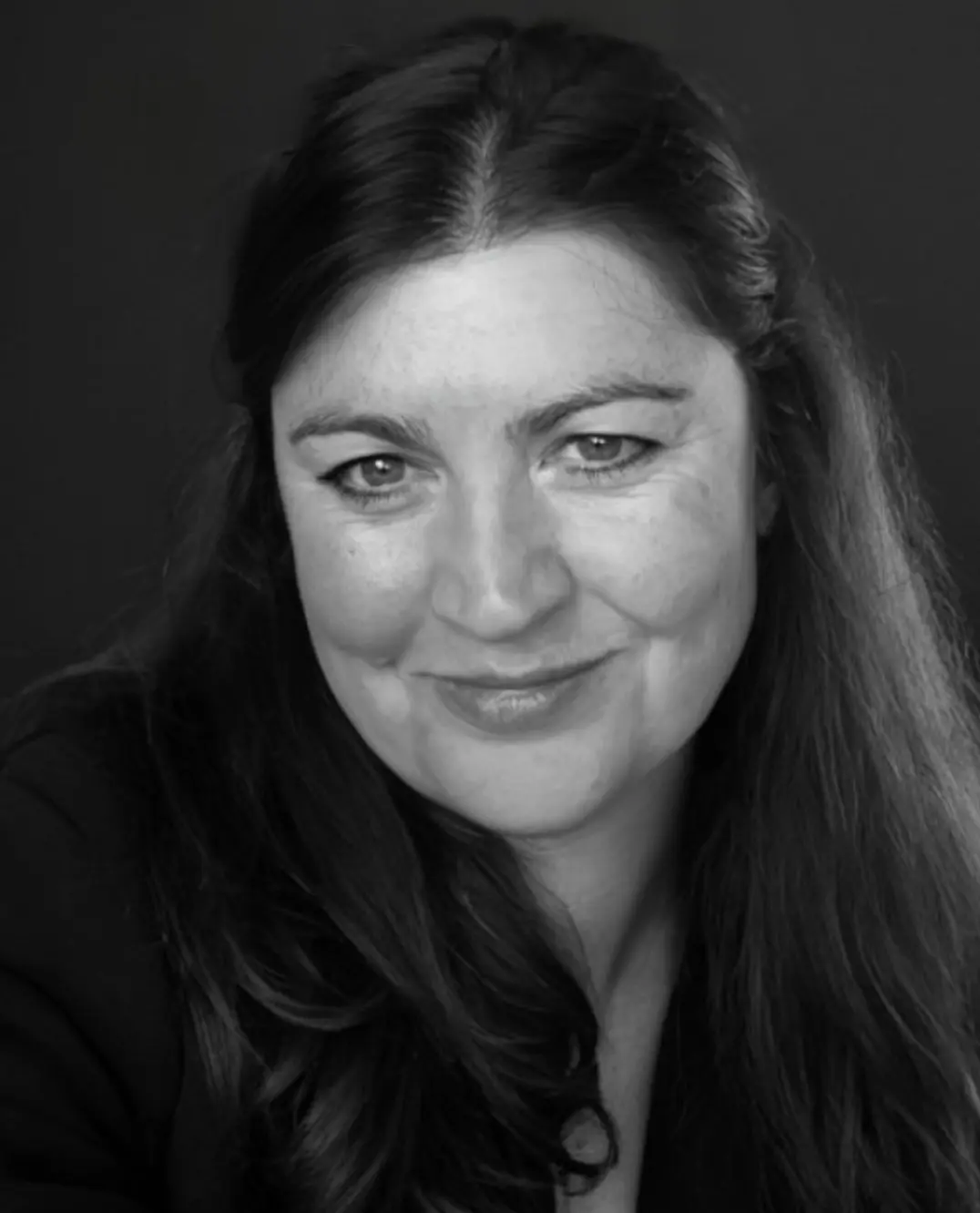 Kate Woodyatt Hudson is Contributing Editor at Financial Narrative and Head of Strategic Programming and Speaker Curation EMEA. She brings more than 25 years of senior experience across financial services, marketing, media and corporate communications, and leads Financial Narrative's events portfolio across the region, including the network's presence at Money20/20 Europe in Amsterdam. She is also the founder and managing director of WH Communications, and formerly served as Global Head of Campaigns and Content for HSBC Group.