

In Conversation With Andrea Brimmer, Chief Marketing and PR Officer, Ally
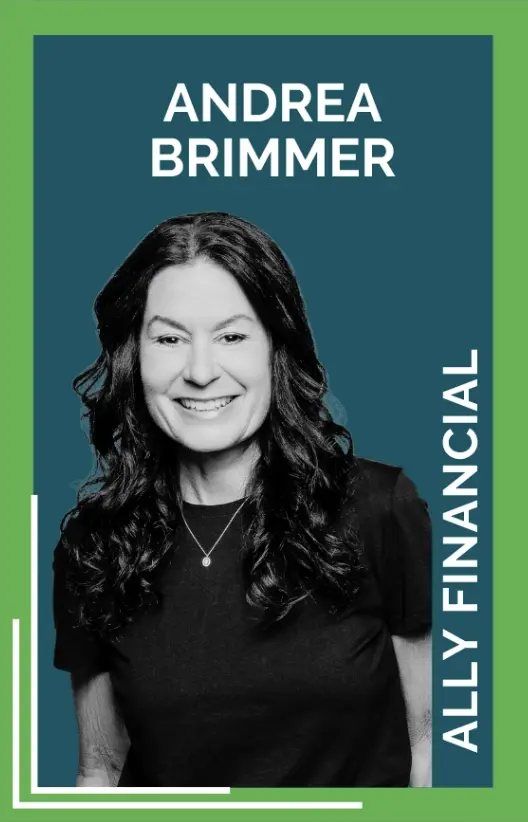
As the Chief Marketing and PR Officer of Ally Financial, Andrea Brimmer has been instrumental in shaping the company’s brand since joining in 2006. She led the creation and launch of the Ally brand in 2009, became CMO in 2015 and has unified the company under the “Do It Right” mantra since 2016. Recognized as one of the industry’s most innovative marketing leaders, her efforts have earned Ally spots on Fast Company’s “Brands that Matter” lists for 2022, 2023 and 2024, along with multiple accolades including induction into the 2024 Forbes CMO Hall of Fame.
Andrea is a passionate advocate for inclusion, launching the marketing industry’s first 50/50 pledge in 2022 to balance advertising spending between women’s and men’s sports. Her leadership in gender equity has garnered recognition as one of Adweek's Most Powerful Women in Sports. Andrea continues to drive innovative marketing strategies that enhance Ally's commitment to social impact and community engagement.
We caught up with Andrea following her 2024 FN50 award win to reflect on her path from leading the Chevrolet account to building one of the most trusted digital-first financial brands—and to talk about the bold bets, brand beliefs, and personal lessons that have shaped her journey.
Tell us about your career and how you arrived at Ally? We’d love to know a pre-Ally career highlight!
I spent 20 years on the Chevrolet account at Campbell Ewald here in Detroit. I rose to become the youngest and first woman to lead the Chevrolet account in the 90-year history of the agency. I put in a lot of hard work to get there and am proud of the work my team and I did together during that time. One of the things I’m most proud of from my time there was the In American Revolution campaign, which was hugely successful and long running.
Coming from their side gives me a great appreciation for what our agency partners bring to the table and I think it makes me a better client.
You played a pivotal role in building Ally’s original brand pillars and stayed through the spinoff, and now Ally is recognized as one of the top digital-only banks. What are the biggest challenges in maintaining brand trust and differentiation in an increasingly crowded digital finance space?
When we started Ally, we were one of the first online-only banks and debuted around the same time as the iPhone, just as mobile banking became possible. We set out not to be just another bank, but a better bank that solved a lot of the pain points of traditional financial institutions.
As we grew, we’ve seen how our customers really need a financial ally because finances impact nearly all aspects of their lives. Today we’re branching into things like money psychology that help people make the most out of their finances to be able to live their lives the way they want to.
The market is now caught up to where we were at launch on the technology side, which means we still have to have a scrappy startup mentality that differentiates Ally from an ever-growing pack.
Ally made a bold commitment to equal media spending in men’s and women’s sports. What is the most important aspect of this initiative to you? And what lessons have you learned about driving both business results and cultural impact?
We’ve learned that it is hard and that to drive change in women’s sports, you really have to do the work. You have to approach the entire sports ecosystem to really make an impact. We all know that women athletes don’t get paid as well as male athletes, but that’s really just one part of what we call the vicious cycle.
Networks need funding and advertising support to put programming in the right time slots. Women’s sports have historically not been in prime-time slots, and so they have not attracted advertisers because your ability to deliver reach and frequency was not optimized. So we decided to be the ones to blink first. We assured the platforms that we would bring money over if they moved the programming into the places that it needed to be. One of our first big moves was to help CBS bring the NWSL Championship to prime time for the first time ever in 2022.
Over the past year, we’ve launched new partnerships that include a new league-wide deal with the WNBA, the first-ever dedicated marketplace for women’s sports media and being the founding partner of Unrivaled (the first women’s 3-on-3 league).
We are also building direct relationships with athletes, including the NWSL Players Association and Team Ally, to help strengthen players’ personal brands to increase their financial trajectory.
Two often overlooked pieces to elevating the whole ecosystem have been our investments in emerging women’s sports media platforms to amplify their voices and being transparent about our playbook to help others drive change. We want more brands to join us in our pledge and help them with what we’ve learned along the way.
With three years behind us now, the 50/50 pledge has cemented Ally in the consumer sports/cultural zeitgeist and has positive impacts on our business. Women’s sports fans are 77% more favorable to Ally, leading to more efficient customer conversion.
Can you share an example where a data-led insight completely changed your marketing approach? Conversely, has there been a time when going against the data paid off?
I really hope that as an industry, we don’t let human creativity and gut instinct go because of the rise of AI and being able to get data on every nuance. I think one of the most pressing issues we are facing as an industry is the death of true creativity. As marketers are scrambling to deliver KPI’s, overabundance of data is driving every decision, and pressure for cost-cutting is constant. In all of this, I’m afraid we are strangling the very thing that makes marketing great – pure creativity.
Creativity should be born out of the authenticity of the brand truth, and deeply connect with consumers at an emotional level, making them want to associate themselves with your brand. I worry that we are hindering our agency partners and creators and driving them to the wrong outcomes because we fear taking chances. I think we need to deeply commit amazing work that drives the brand forward.
Many CMOs struggle to prove the value of brand investments that don’t yield immediate ROI. What advice do you have for making the case for brand-building to executive leadership?
We partnered with TransUnion and MMA to help prove that digital marketing and our high-level brand tactics work together to drive brand growth. It was a massive study with 850,000 respondents over one year. We were able to show that brand work drives favorability, which over the long run drives customer growth. We’ve proven that favorability is the key metric in terms of driving substantive growth. Those favorable to Ally have an estimated 6x higher conversion rate with ~90% lower cost to convert.
What advice would you give to your younger agency-side self, or to younger people in communications roles, that would have been helpful in your career journey?
When I was at Campbell Ewald, I invested too much of myself personally into my job. I missed a lot of time with my kids that, particularly now that I've gotten older, I wish I could have back. While we did a lot of great work I'm proud of, it's a part of their lives and my life that I can never get back. I would have been better at my job if I'd worked harder to find a balance. I've learned from that and I've tried to pull that into my career at Ally.
