

If News Is a Popularity Contest, Influencers Win
 Snapshot
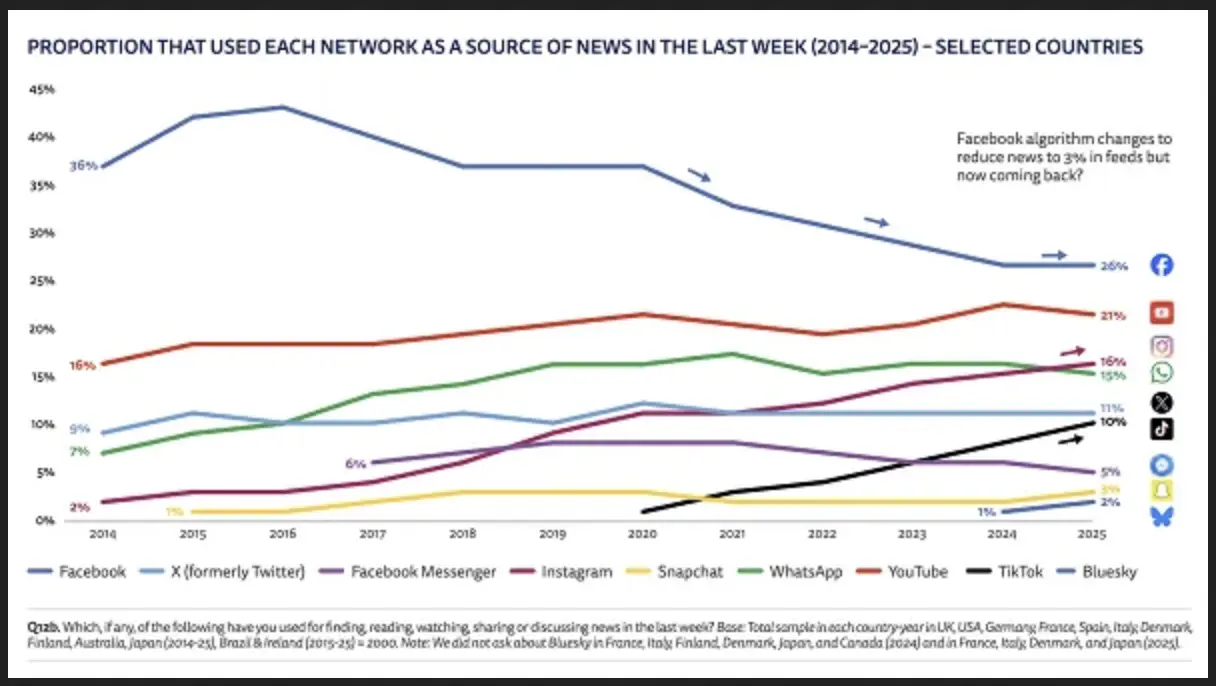
Social media has officially surpassed television as the primary news source for U.S. adults, according to the 2025 Reuters Institute Digital News Report.
Platforms like Facebook, TikTok, and Instagram now account for 54% of news consumption, edging out both TV and traditional news apps. The shift is especially pronounced among younger audiences, who increasingly rely on influencers rather than journalists to interpret events. This trend reflects a growing mistrust of mainstream media and a preference for “authentic” personalities who deliver news through short-form video.
But the rise of influencer-driven news also brings risks; most notably, an environment ripe for misinformation and emotionally charged content designed to game engagement algorithms. Platforms reward outrage, not nuance, and that may be fueling polarization and disinformation. Meanwhile, the increasing dominance of video content over text raises questions about the depth of understanding viewers are getting from bite-sized news clips. Influencers have become political tastemakers, and some could even become candidates themselves, as cultural power shifts away from media institutions.
For brands, media companies, and public institutions, this signals a need to rethink how authority and trust are built in the digital age. Traditional media’s role is fading, and unless it adapts to new formats and faces, it may continue to cede ground to charismatic creators with ring lights and ringers.
Full story: Reuters - Social Media Today