
Why Generational Marketing Theory Still Matters
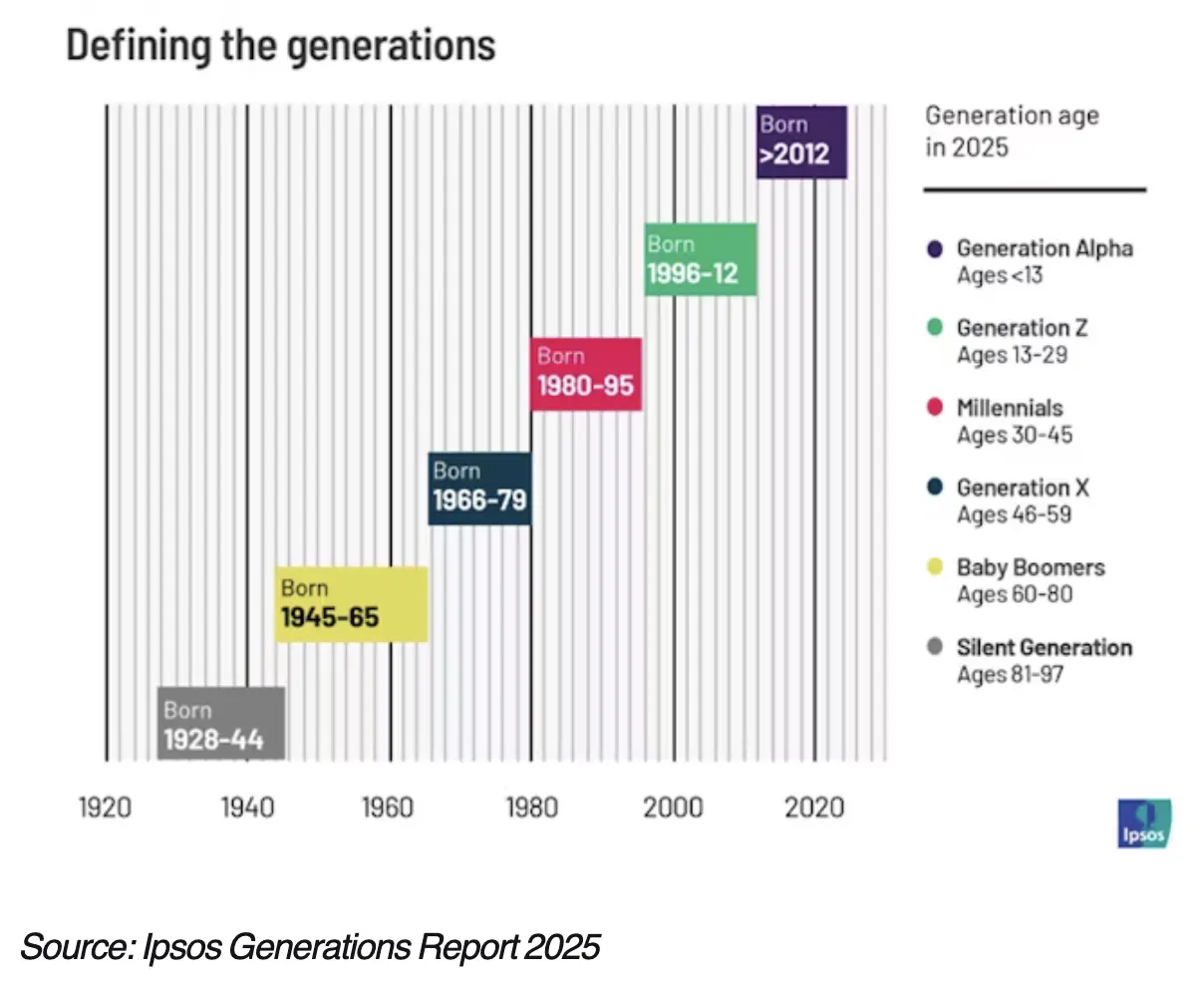 Snapshot:
Generational theory often sparks debate. Is it too simplistic, too Western, or too speculative? But when applied carefully, it remains a useful tool for decoding how people view the world, make decisions, and relate to brands.
The 2025 Ipsos Generations Report demonstrates generational insights can meaningfully shape strategy when brands distinguish between three forces: period effects, life stage effects, and cohort effects.
Period effects refer to shared experiences that reshape behavior across age groups. COVID-19, for example, permanently altered how we work and redefined what success looks like, especially for younger workers. Life stage effects explain why younger adults travel more and older adults save more. However, even those patterns are shifting with delayed parenting and rising costs of living.
Cohort effects are subtler but often the most revealing. These are long-term traits shaped during a generation’s formative years that tend to stick. Gen Z, who came of age during a pandemic and political upheaval, may prioritize workplace flexibility and mental health more than earlier generations.
Marketers face a tricky challenge: by the time solid data emerges, it's often too late to capitalize on an insight. That means they must act on incomplete information but avoid mistaking short-term behavior for long-term generational traits.
The rise of Gen Alpha is a prime example. Born into a digital-first world, they’re often dismissed as having short attention spans. But early signs suggest they may simply process information faster, more visually, and with sharper task-switching ability.
The report cautions against premature assumptions. The “iPad kid” label might dominate media headlines, but the truth is more nuanced and unfolding. Teachers report engagement challenges, yet it’s unclear how much stems from tech, post-COVID learning gaps, or a deeper generational shift.
Some takeaways from the report include:
-
Consumers’ definitions of success are shifting. Many now equate financial stability with flexibility, not just homeownership or retirement.
-
As Gen Z and Alpha gain spending power, products built on control, customization, and emotional reassurance are likely to resonate.
-
Market timing matters: campaigns that wait for "certainty" about a generation may already be too late.
-
Cultural norms and life stages are becoming more fluid and less predictable, like when to have kids, buy a home, or retire.
-
Brands that view generational theory as a spectrum of overlapping influences, not fixed stereotypes, are more likely to connect with evolving mindsets.
By recognizing that generational patterns are shaped by complex forces, not just age or tech usage, brands can better prepare for what's next — not just who’s next.
Full story: Marketing Week - 2025 Ipsos Generations Report