
Q3 Pulse Check: AI Is Embedded, But Not Ready for Prime Time
FNN's Q3 2026 Pulse Check asked 24 senior financial marketing and communications leaders across the US and UK how their teams are using AI, where it is delivering value, and what is still standing in the way. The respondents are almost entirely CMOs, VPs, Directors, and Heads of Marketing, Communications, Brand, and PR, skewing toward mid-market firms.
Download the PDF
Past the tipping point
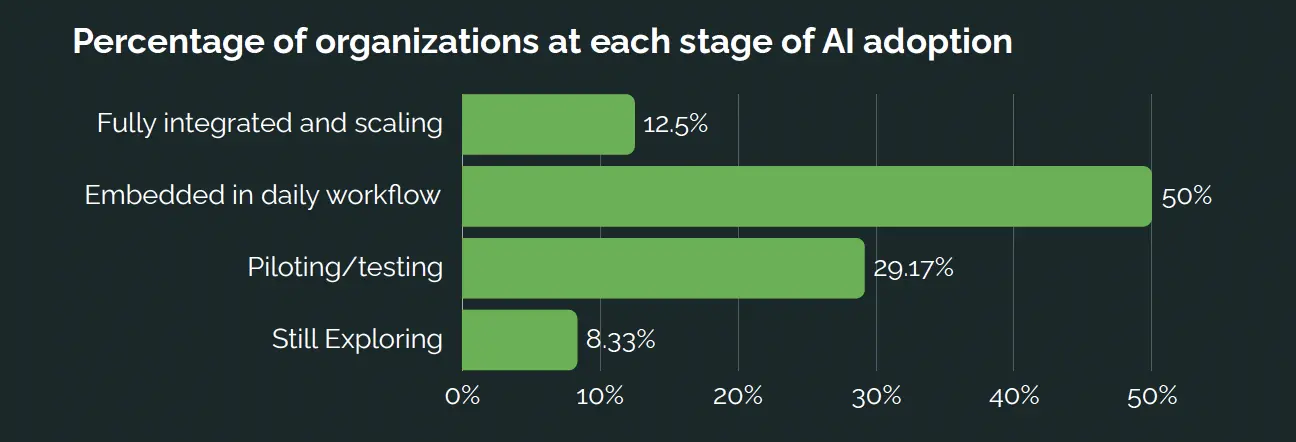
The industry conversation about AI still tends toward caution and experimentation. The data does not reflect that. The majority of financial marketing teams have now embedded or fully integrated their AI adoption. For this cohort, AI is not a pilot. It is part of how work gets done.
The hours saved are real
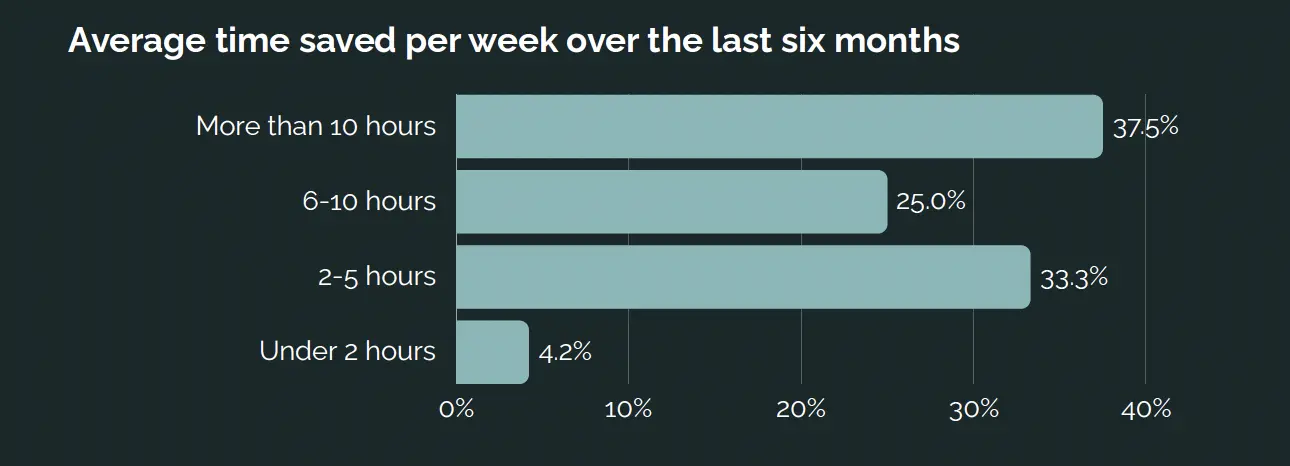
Time savings track closely with depth of adoption. The most frequently selected time saving per week is over ten hours, as chosen by more than a third of respondents. Only one person in the sample saves fewer than two hours per week. The pattern is particularly pronounced at smaller organisations: among those at firms of 250 or fewer employees, the majority report saving more than ten hours per week, a rate significantly higher than at larger companies. The sample size limits how far that finding can be pushed, but it is consistent with what many in the community will recognise: smaller teams can move without the governance layers and approval processes that slow adoption at scale.
In daily use, but not in front of clients
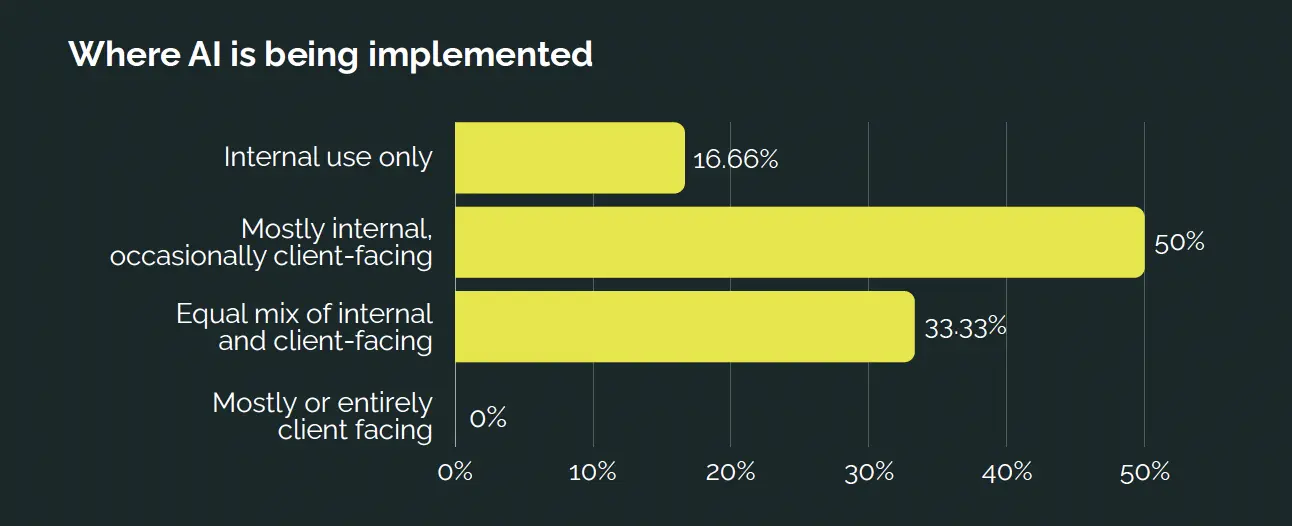
While AI is embedded, how much clients see remains in question. Half of respondents describe their use as mostly internal with occasional client-facing application. A third report an equal mix. Not one respondent said client-facing delivery was their primary use case. AI is in the work. Getting it fully in front of clients and customers is the next step.
The tools are there. The trust isn't.
Confidence in output quality remains the biggest barrier standing in the way of implementing to clients and customers. The open-ended responses put a sharper point on it: where respondents described their barriers in their own words, the issue was consistently how AI was rolled out rather than what it can do. Restricted tool access, absent governance frameworks, and lack of IT and security support came through repeatedly.
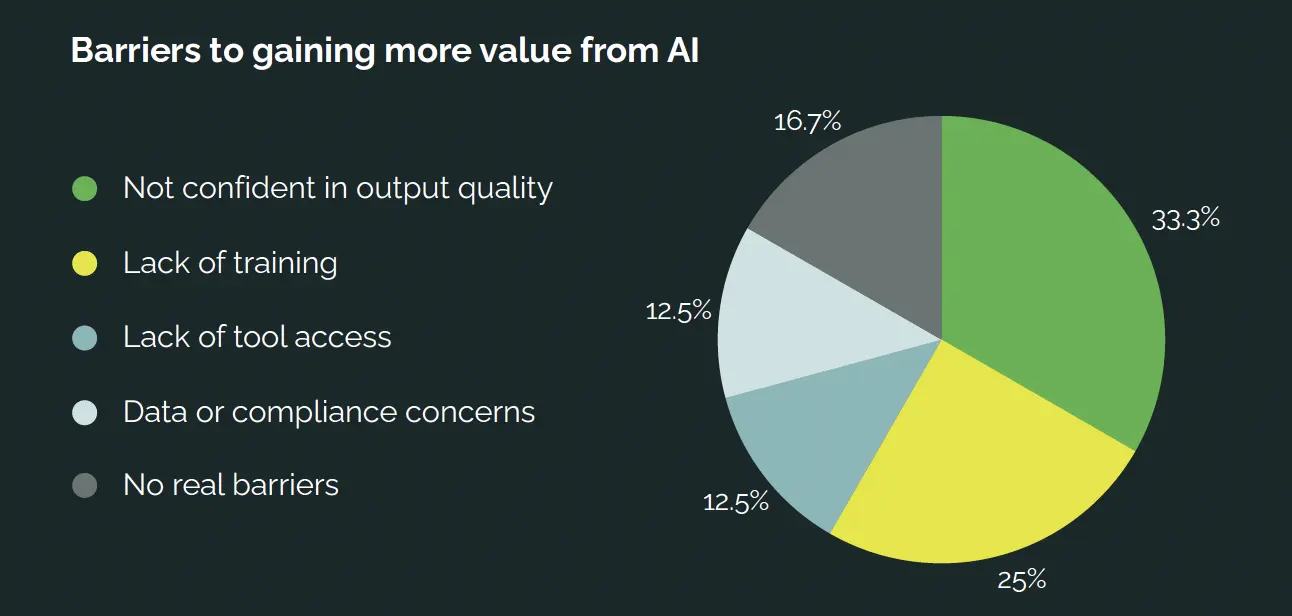
The most pointed response came from a leader at a firm of more than 10,000 employees, where a lack of governance had created brand risk serious enough to be escalated to senior leadership, and was the only respondent saving fewer than two hours per week. Governance, or the absence of it, is the variable that separates the teams getting the most from AI from those still waiting for it to deliver.
AI SEARCH IN FOCUS
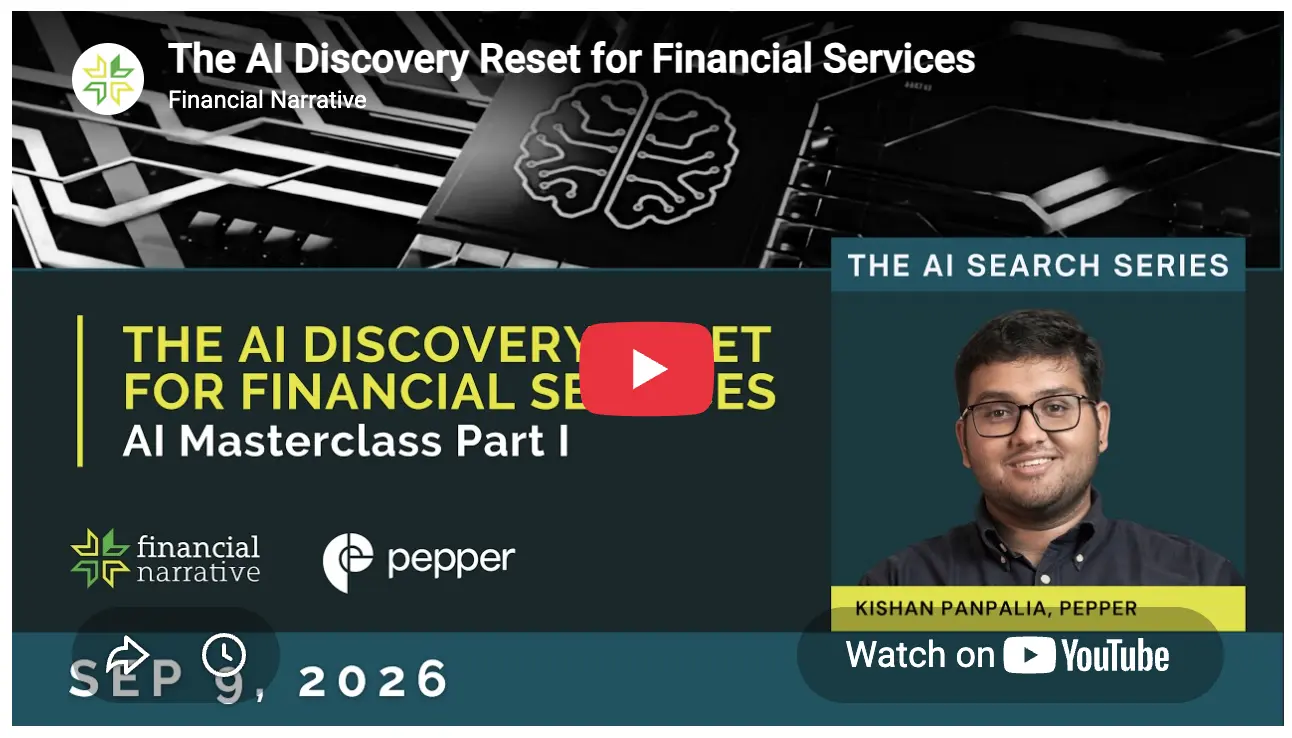 The AI Discovery Reset
The Pulse Check data points to where trust in AI is still developing. For those looking to address the customer-facing gap specifically, FNN's recent webinar with Kishan Panpalia of Pepper covers what financial services brands need to do now to be visible, citable, and retrievable in an AI-first discovery environment.
Watch the replay >>>.
2026 Innovation Awards: AI Leaders
The seven winners of FNN's 2026 Innovation Awards AI Leaders List represent what moving from pilot to real transformation looks like in practice — from enterprise-grade governed deployment at S&P Global and Mastercard to lean in-house agentic builds at Invela. Their answers to a few of the questions raised in this Pulse Check are worth reading >>>

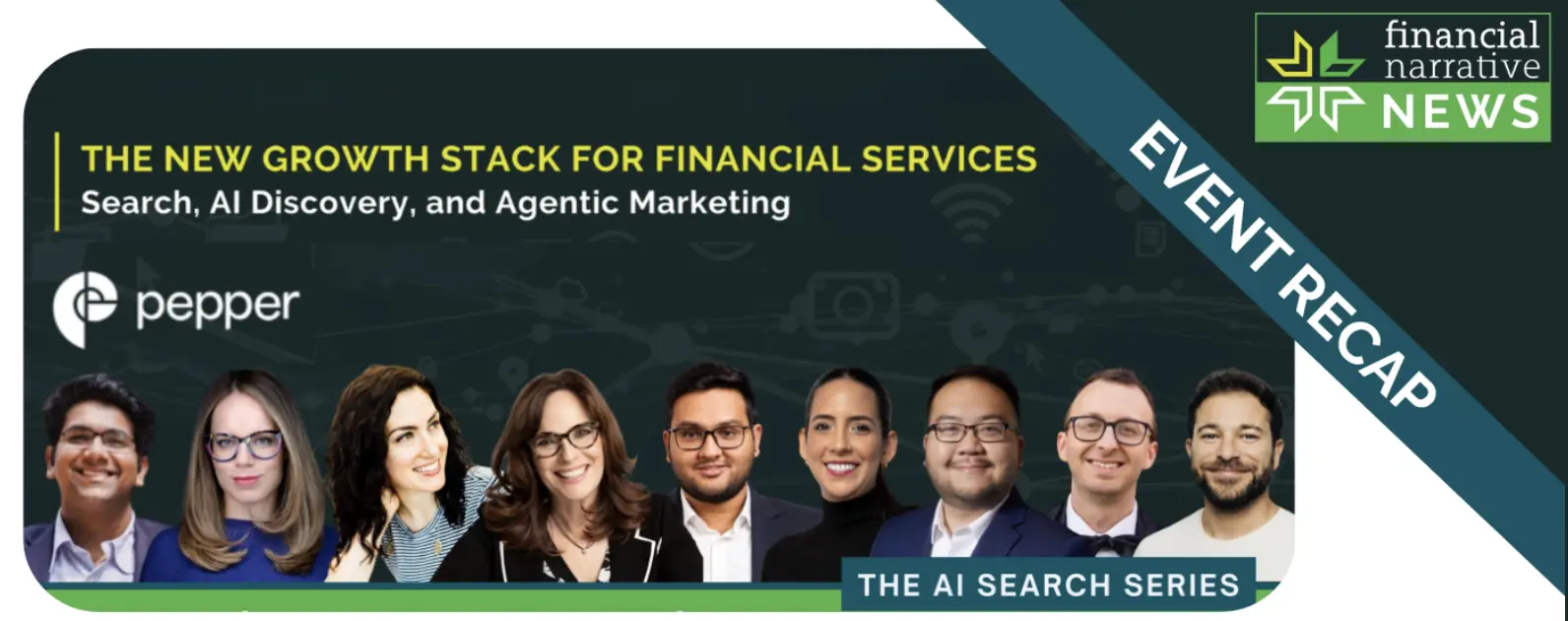 Many firms aren't accounting for the fact that AI models are developing views about their brands long before a human prospect ever makes contact. The AI Agent as Buyer is a practical session on how AI-driven discovery actually works for financial brands. Watch the replays >>>
FALL SUMMIT NYC
The future economy isn't just coming—it's already changing the rules for how financial services firms attract, engage, and earn customer trust.

UK SUMMIT LONDON
The Financial Narrative UK Summit brings senior marketing and comms leaders together from across financial services, banks, insurers, fintechs, and asset managers for a day of conversation you can't get anywhere else.
